Slate Roof Repair in Bunker Hill, Waterbury from $500. An estimated $500 to $3,000 for most slate repairs – and the code does not allow slate to be roofed over. Free inspection and a written quote.
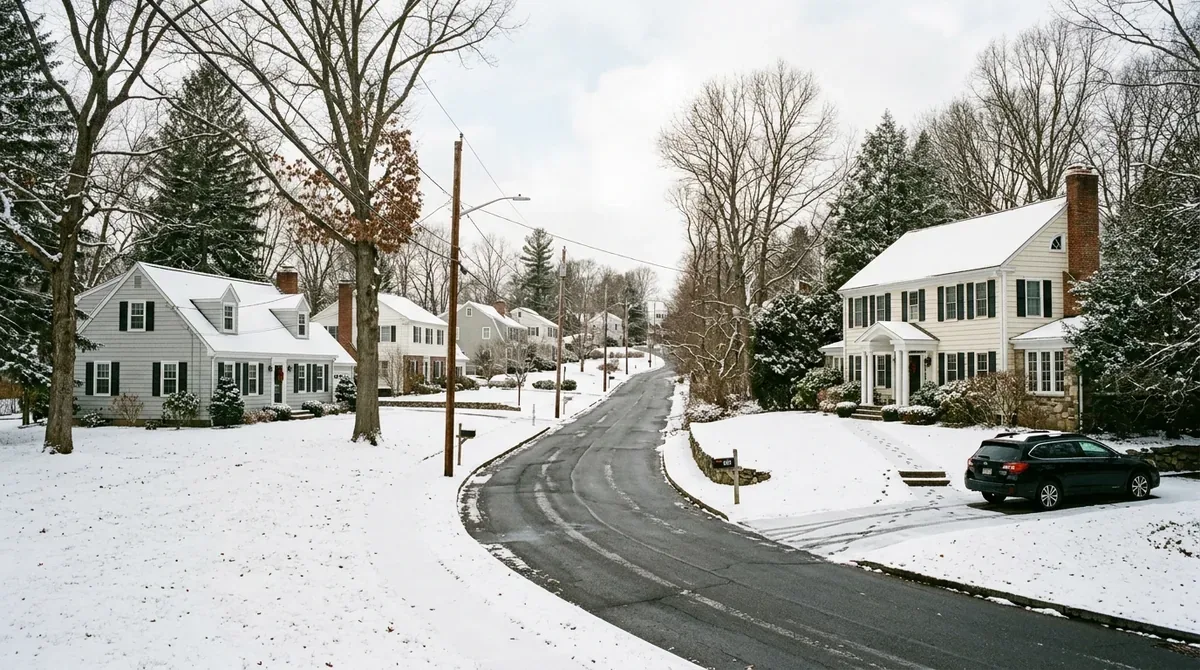
Slate is uncommon on Bunker Hill's colonials, capes and ranches, so a slate repair here is usually on one of the older houses from the trolley-era subdivisions. The stone is matched from salvage where possible, never patched with asphalt.
Sound slate can outlast what holds it up. Slipped slates whose nails have given way, valley and chimney flashings worn through, and old repairs done in tar are what usually bring a slate roof to the point of leaking. The stone is the last thing to go: when slates flake, soften or split across the whole field, repair stops being the answer.


Most slate repairs are estimated at $500 to $3,000, or roughly $50 to $300 per slate. A full slate replacement is estimated at $15 to $30 or more per square foot, and the code does not allow a cheaper layer over it, so repair is where the money goes first. The most predictable pricing on this site: bigger lots, room to stage, and simpler roof shapes. A cape with rooms in the roof adds eaves and ventilation work that an open attic would not.
A handful of slipped or cracked slates on a reachable slope, with sound battens and good stone around them.
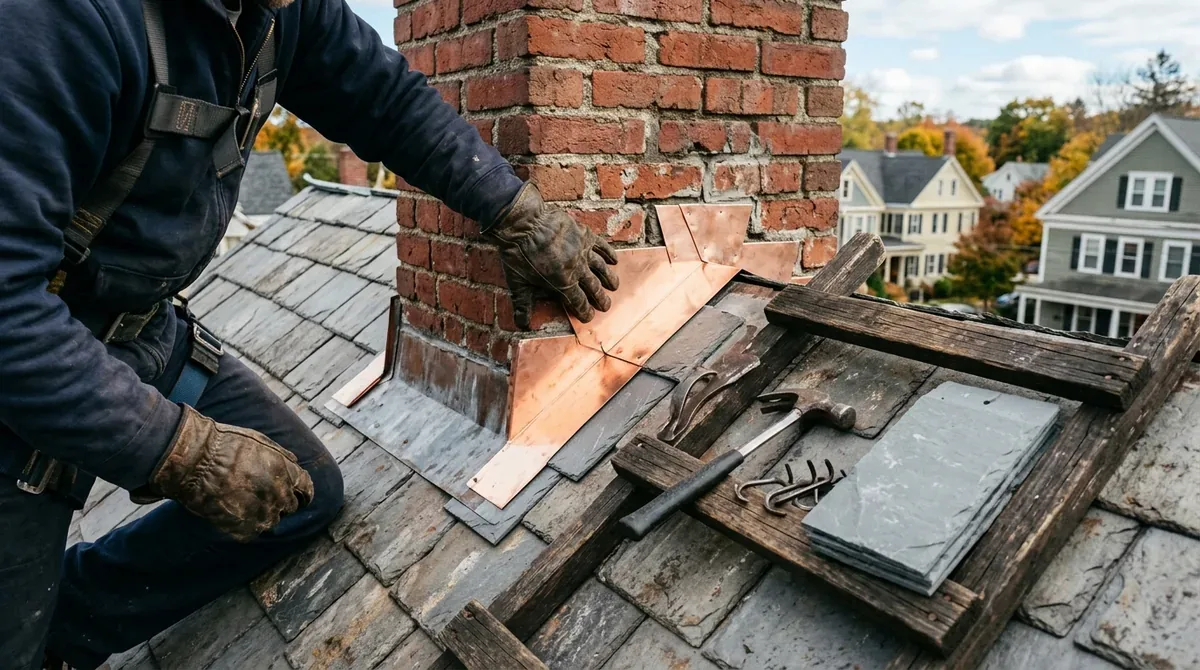
Matching old stone, steep pitches, dormers and valleys, and failed flashings under the slate rather than in it.
When the slates themselves are delaminating across the field. Until then, a slate roof is usually worth keeping.
Capes with rooms in the roof are the thing to establish first. A finished upper story changes the ventilation and makes the eaves harder to detail, and the eaves is exactly where Connecticut's ice barrier rule does its work.
On a cape, find out whether anyone sleeps up there before anything else gets decided.
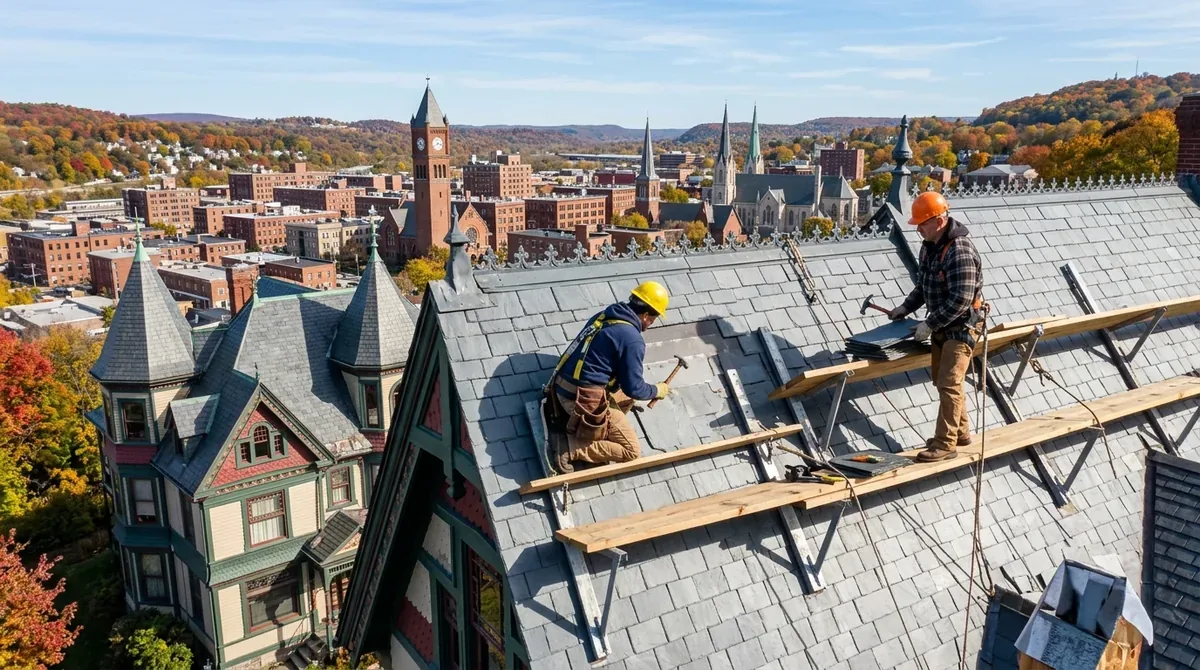
The stone is never stood on.
The roof is inspected without walking the field. Slipped and cracked slates, worn flashings and old tar repairs are mapped and photographed.
Replacements are matched for size, thickness and color, from salvage or new stock, because a mismatched slate shows from the street for decades.
New slates go in on slate hooks or copper nails, never face-nailed and tarred.
The most straightforward replacements in Waterbury are on Bunker Hill: bigger lots, room for a dumpster in the drive, and plainer roofs on colonials and later ranches.
On Bunker Hill capes the classic repair is at the eaves of a finished upper story, where warm rooms melt snow that refreezes at the cold overhang.
Bunker Hill's emergencies are mostly ice dams on capes and storm damage on bigger, open lots where trees and wind reach the roof.
On Bunker Hill the typical flat roof is a garage, a breezeway or a rear addition on a cape or ranch, draining onto a pitched roof or a driveway.
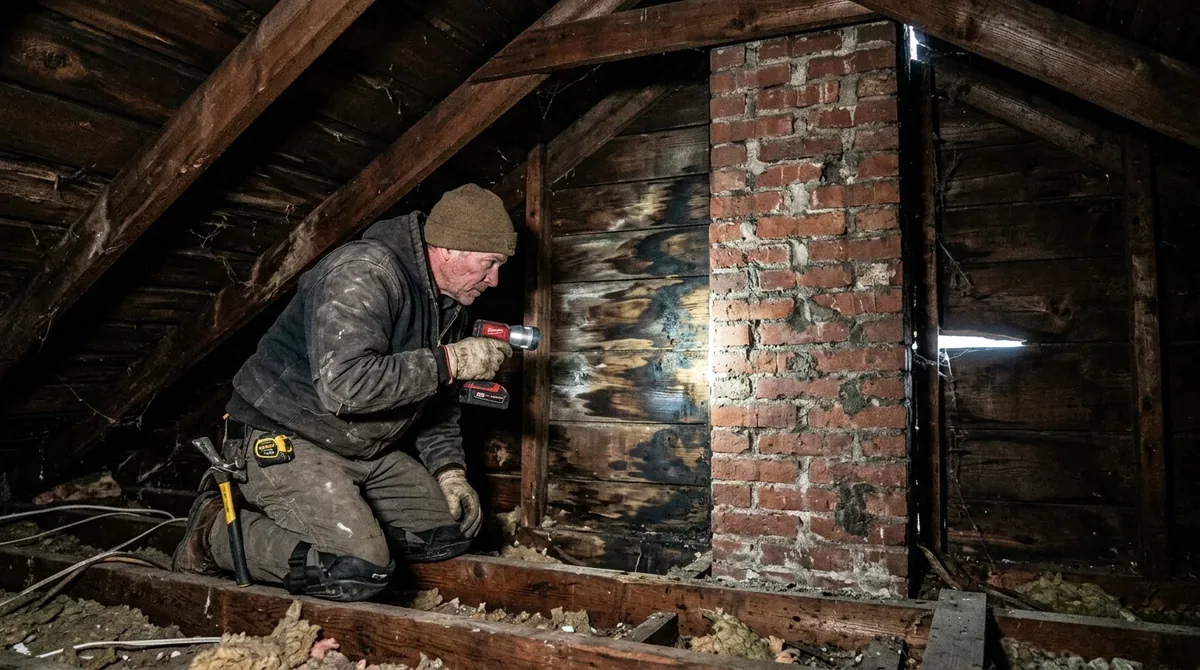
On Bunker Hill capes the chimney often rises through a finished upper story, so a flashing leak shows as damp on a bedroom wall rather than in an attic.
On Bunker Hill the inspection establishes whether the roof space is finished rooms or open attic.
One city, one permit office. The 25% line decides it.
Burnt Hill, 1897-1925. Slate and clay tile survive.
Brass-family Queen Annes. Many valleys, steep lots.
The 1674 ridge. Farmhouses and well-kept triple-deckers.
River to ridge. Triple-deckers and six-family blocks.
Rocky hills, Washington Hill and Hopeville. Access first.
Answered before anyone books a visit.
Not safely, and not without breaking slate. Repairs are done from roof ladders hooked over the ridge and from brackets, so the field is never stood on.
No. Tar over slate holds water against the stone, hides the real failure and makes the next repair harder. A slipped or broken slate is replaced and hung on a slate hook or a copper nail.
Look at the slates rather than the leaks. Slipped or cracked slates and failed flashings are repairs. Slates that are flaking, soft or delaminating across the whole field mean the stone itself is at the end of its life. An inspection should tell you which, in writing.
Every quote states whether the job is a repair or a permitted replacement. The code lines named: ice barrier, deck-joint strip, layer count.