Roof Replacement in Overlook, Waterbury, typically $10,000 - $18,000 (est.). Burnt Hill, 1897-1925. Slate and clay tile survive. Local crew, a free written quote, and the permit pulled through the Waterbury Department of Inspections.
This is where Waterbury's slate survives: the district's National Register nomination records houses still carrying slate or clay tile. Gambrels and hipped Foursquares also mean more hips and valleys per square foot than a plain gable.
On a slate or tile roof here the first question is whether it can be repaired, because it cannot be roofed over.
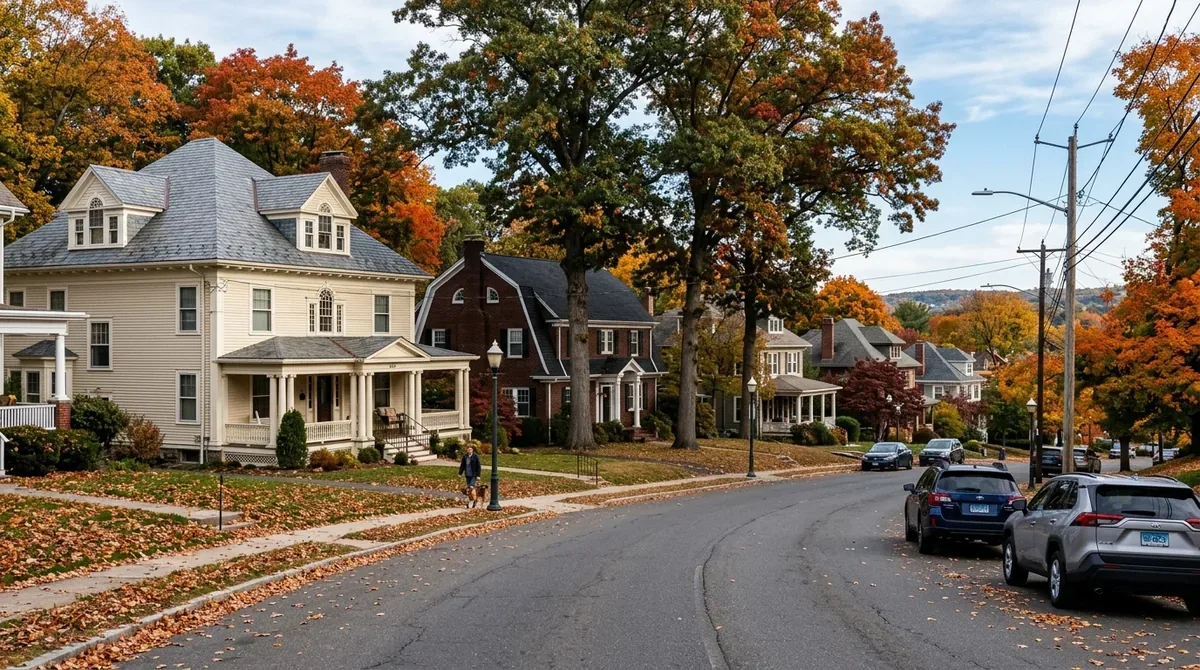
A planned district on Burnt Hill, laid out in 1897 and about ninety percent built by 1925, beside the Olmsted Brothers' Fulton Park. Two- and two-and-a-half-story houses on generous lots: Queen Anne first, Colonial Revival above all, then gambrel-roofed Dutch Colonials, Foursquares and bungalows, mostly wood frame under clapboard or shingle.

7 lanes of roofing work, each priced against a written scope.
Replacing a roof in Overlook starts with what is on it.
Repairs in Overlook are often on roofs that cannot be covered over, so they matter more than elsewhere.
An emergency on an Overlook slate roof needs care in the dark that a shingle roof does not: walking the field breaks more slate than the storm did.
Flat roofing in Overlook is mostly porch roofs and rear additions on otherwise pitched houses – and where the main roof is slate or tile, the junction between the two is the detail that leaks.
Overlook is the part of Waterbury whose National Register nomination records houses still carrying slate or clay tile.
On an Overlook slate roof, chimney flashing is woven into the slate courses, and a repair done with caulk and asphalt patches leaves black scars on gray stone.
In Overlook the inspection's first job is identifying the covering: slate, clay tile or asphalt, and if slate, whether the stone is sound or delaminating.
Worth knowing before you start calling round, because the busiest weeks are the worst weeks to be choosing.
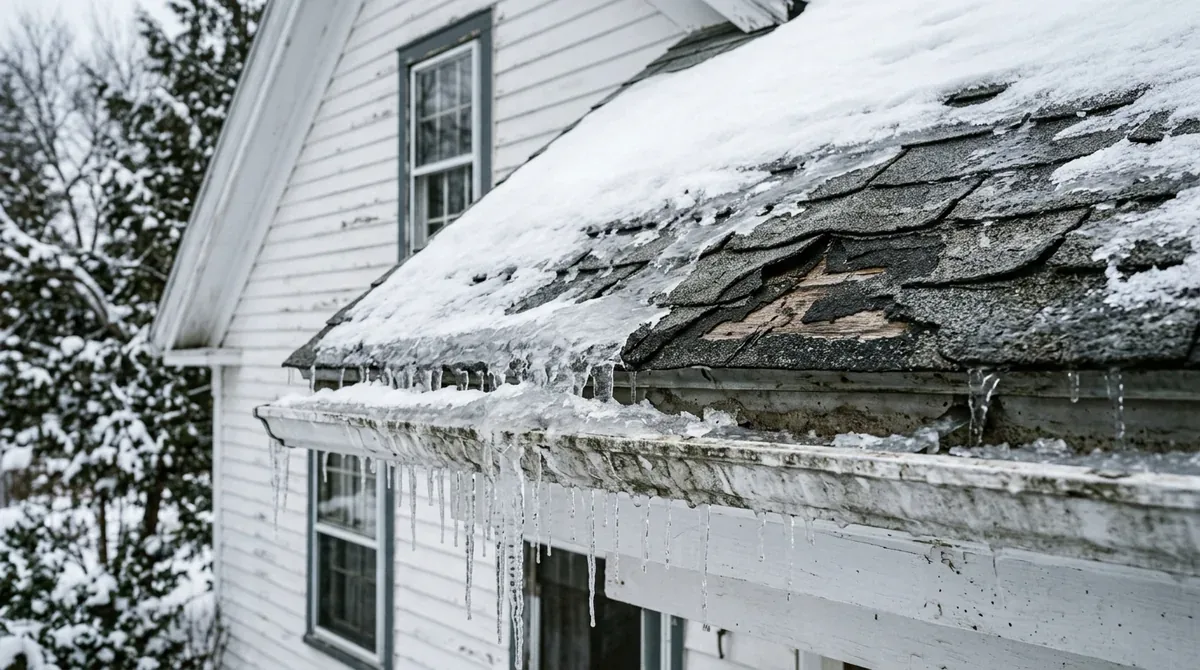
Waterbury's snow season runs from about November into April, and January is usually the heaviest month. Roofs here fail at the eaves: meltwater backs up behind an ice dam, gets under the shingles and comes through a top-floor ceiling during the first real thaw – so the calls arrive together, across the whole city, in the same few days.
Shingles also need warmth to seal down properly, which is one more reason a replacement arranged in late summer or early fall is a better roof than the same job rushed in February. The permit takes the same time either way; the weather does not.
One city, one permit office. The 25% line decides it.
Brass-family Queen Annes. Many valleys, steep lots.
Trolley-era half-acre lots. Capes with rooms upstairs.
The 1674 ridge. Farmhouses and well-kept triple-deckers.
River to ridge. Triple-deckers and six-family blocks.
Rocky hills, Washington Hill and Hopeville. Access first.
Published ranges and straight answers, before you ring round.
An asphalt roof replacement in Connecticut is estimated at $10,000 to $18,000 for most houses, with architectural shingle at about $4.50 to $8.00 per square foot installed. Slate is a different order of money, estimated at $15 to $30 or more per square foot. In Waterbury add the permit, roughly $380 on a $14,000 job, and allow for decking as a rate per sheet, because nobody knows how much is soft until the old roof is off.
For an asphalt roof on an ordinary Waterbury house, yes: it is well above the estimated $10,000 to $18,000 most houses cost, and about a tenth of the city's typical home value. It is not unreasonable for slate work, a large Queen Anne on the Hillside with many valleys, or a big multi-family building. The figure alone does not settle it; the itemized roof area, tear-off, decking rate and permit do.
Start with the registration: Connecticut registers home improvement contractors, and the HIC number belongs on the advert, the van and the contract, checkable at elicense.ct.gov. Then read the contract for what the Home Improvement Act requires – start and completion dates, a notice of your three-day cancellation right – and for whether a permit is included on a full replacement. A quote that names the ice barrier, the deck-joint strip and the decking rate is one that can be checked.
One to three days on site for most asphalt roofs on a house that size, once the permit is issued and the weather allows. Steep pitches, a second layer to strip, a lot of rotten decking or a three-story building with staging push it longer. Plan around the snow: a roof booked for early fall is far easier to schedule than one needed in January.
Registration number and dates on the contract, as CT law requires. Connecticut figures, estimated as ranges, not a national calculator.