Slate Roof Repair in Brooklyn, Waterbury from $500. An estimated $500 to $3,000 for most slate repairs – and the code does not allow slate to be roofed over. Free inspection and a written quote.
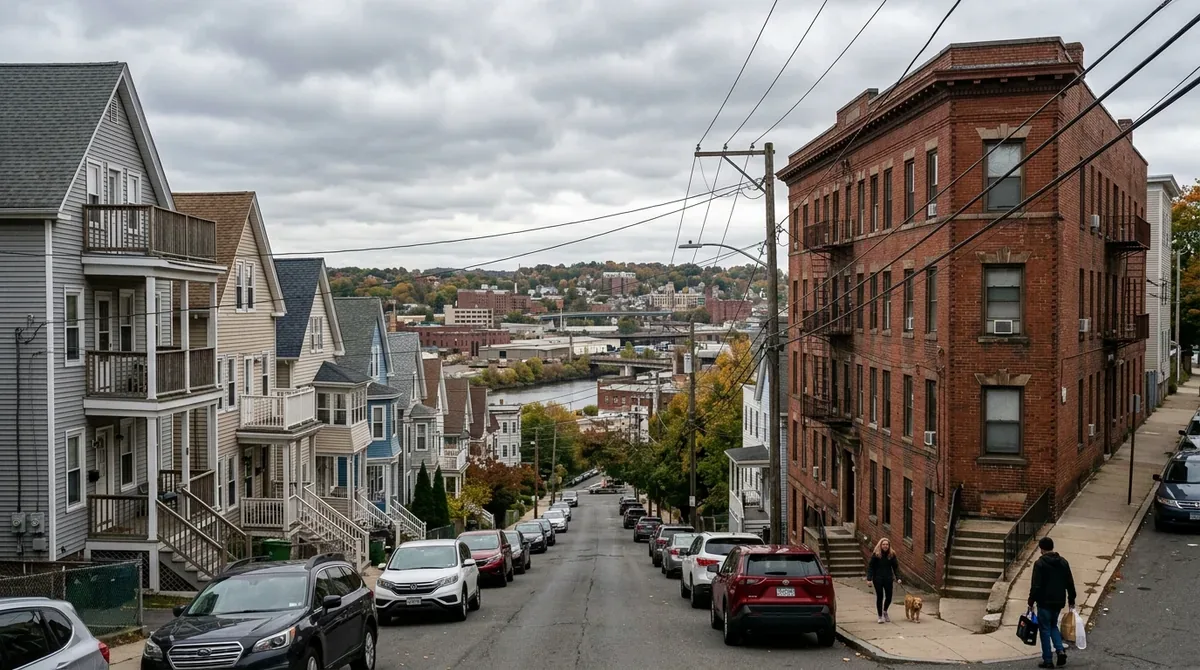
Slate is rare on Brooklyn's triple-deckers and blocks, but where an older building keeps it, the dense street makes access the hard part: staging that does not land on the neighbor's roof, and no one walking the slate.
Sound slate can outlast what holds it up. Slipped slates whose nails have given way, valley and chimney flashings worn through, and old repairs done in tar are what usually bring a slate roof to the point of leaking. The stone is the last thing to go: when slates flake, soften or split across the whole field, repair stops being the answer.


Most slate repairs are estimated at $500 to $3,000, or roughly $50 to $300 per slate. A full slate replacement is estimated at $15 to $30 or more per square foot, and the code does not allow a cheaper layer over it, so repair is where the money goes first. Density sets the price: where staging can stand, where a dumpster can go, and whether the building is a triple-decker or a six-family block permitted as a larger building.
A handful of slipped or cracked slates on a reachable slope, with sound battens and good stone around them.
Matching old stone, steep pitches, dormers and valleys, and failed flashings under the slate rather than in it.
When the slates themselves are delaminating across the field. Until then, a slate roof is usually worth keeping.
Six-family blocks are past the size of building the residential code covers, so their roofs are permitted as larger buildings. On close-set triple-deckers the constraint is room to work: staging, a dumpster, and three floors of households.
Here the plan for the street – where the ladder stands and where the tear-off goes – is part of the quote.
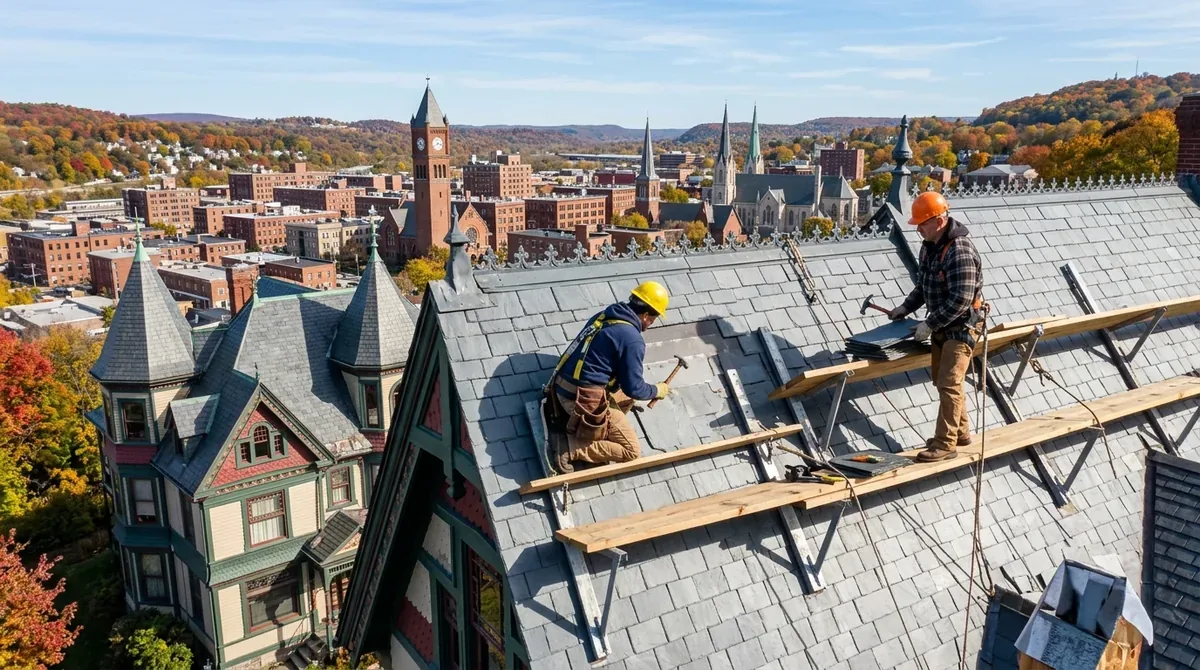
The stone is never stood on.
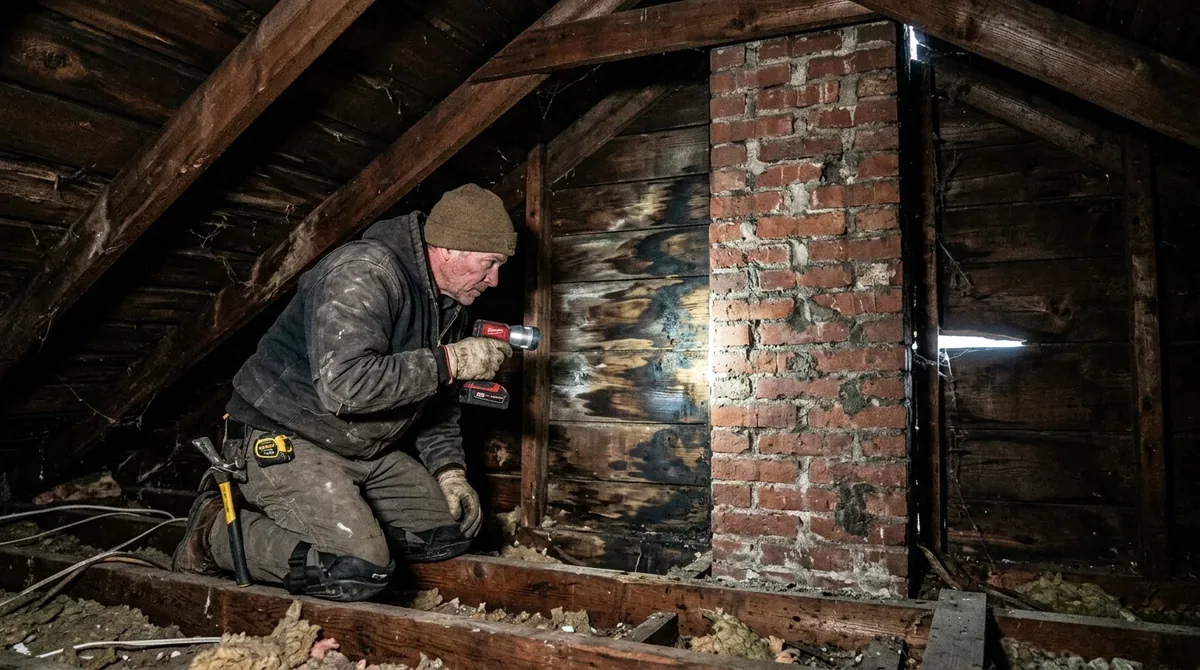
The roof is inspected without walking the field. Slipped and cracked slates, worn flashings and old tar repairs are mapped and photographed.
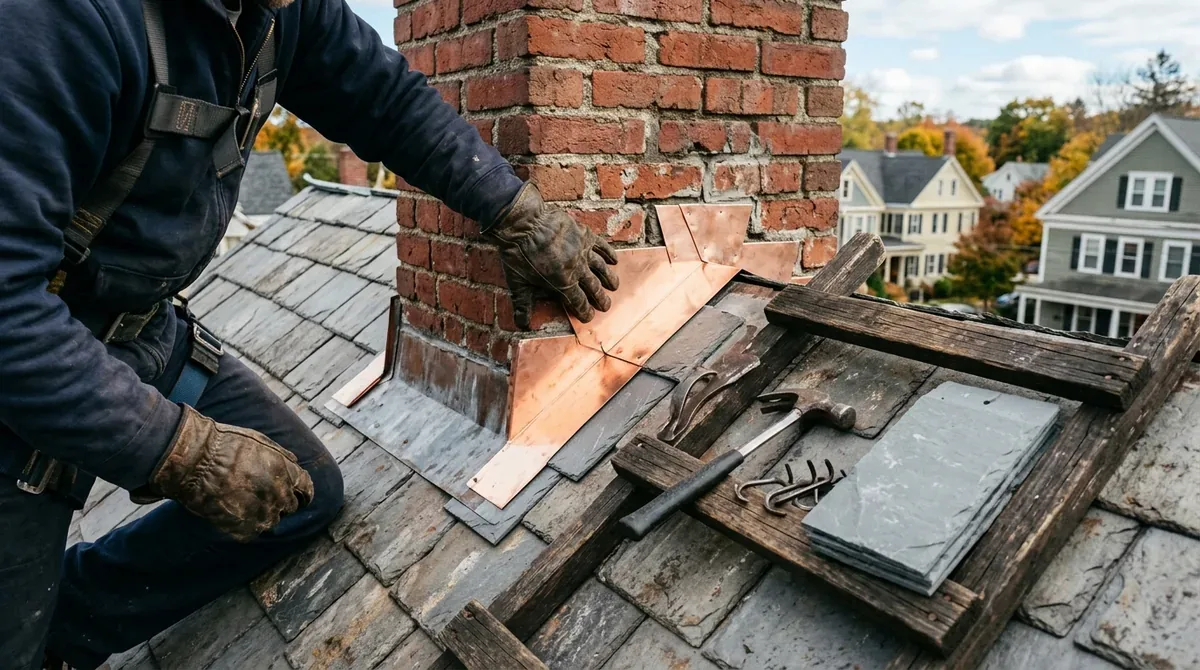
New slates go in on slate hooks or copper nails, never face-nailed and tarred.
You get a written view of the field: how much good stone is left, and whether repair still makes sense.
In Brooklyn the building decides the paperwork.
In Brooklyn's dense blocks a repair is often at a junction shared with the house next door, or on a roof three floors up over two rented apartments.
A leak in a Brooklyn triple-decker or six-family block reaches more than one household.
Brooklyn has the most genuinely flat roofing on this site: six-family blocks, tenements and storefronts as well as porch roofs.
Brooklyn's triple-deckers and blocks often carry several flues through one roof, and a failed flashing can put water into a unit some distance away.
In Brooklyn the inspection starts with the building: how many units, and therefore which code and what permit.
One city, one permit office. The 25% line decides it.
Burnt Hill, 1897-1925. Slate and clay tile survive.
Brass-family Queen Annes. Many valleys, steep lots.
Trolley-era half-acre lots. Capes with rooms upstairs.
The 1674 ridge. Farmhouses and well-kept triple-deckers.
Rocky hills, Washington Hill and Hopeville. Access first.
Answered before anyone books a visit.
No. The building code does not allow a new covering to be installed over slate. The choices are to repair the slate or remove it, which is why a careful repair is worth so much on a slate roof that still has good stone.
Look at the slates rather than the leaks. Slipped or cracked slates and failed flashings are repairs. Slates that are flaking, soft or delaminating across the whole field mean the stone itself is at the end of its life. An inspection should tell you which, in writing.
Not safely, and not without breaking slate. Repairs are done from roof ladders hooked over the ridge and from brackets, so the field is never stood on.
Every quote states whether the job is a repair or a permitted replacement. The code lines named: ice barrier, deck-joint strip, layer count.