Roof Repair in Bunker Hill, Waterbury from $150. An estimated $400 to $2,000 for most repairs – and in Connecticut a repair has a size limit. Free inspection and a written quote.
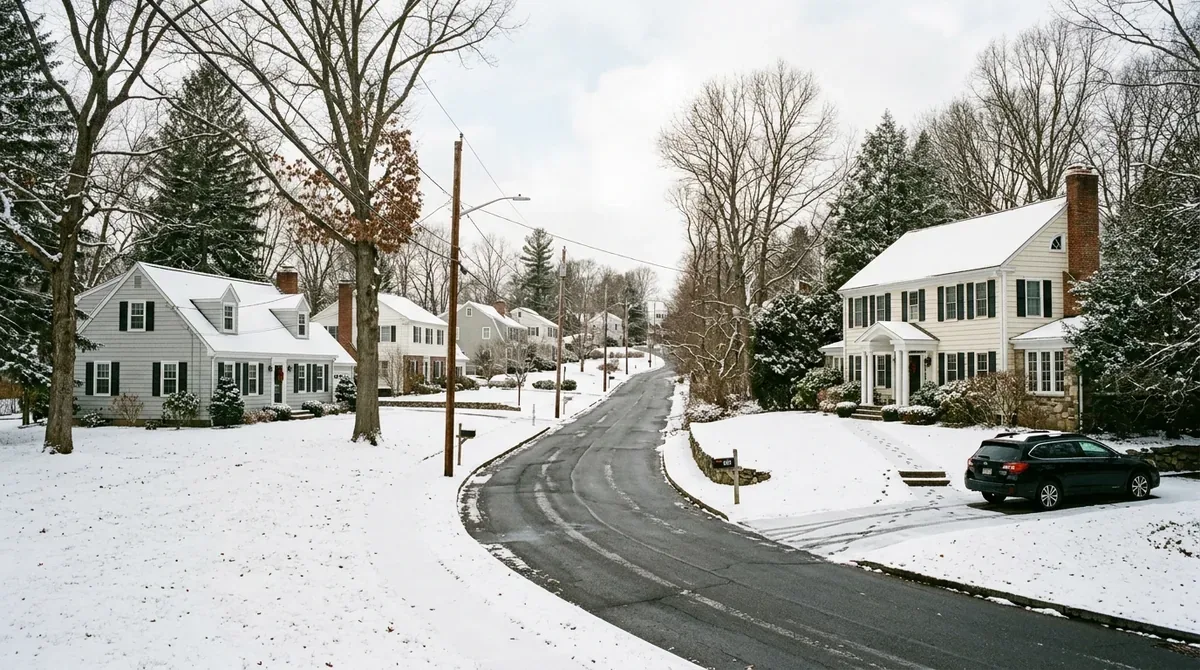
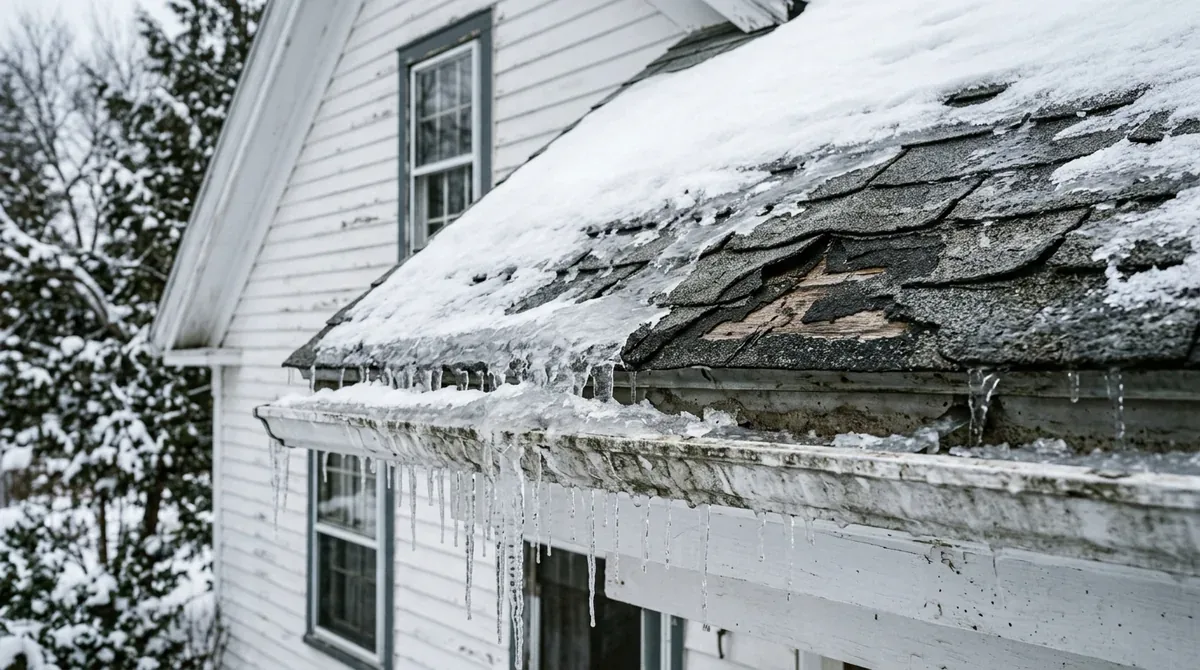
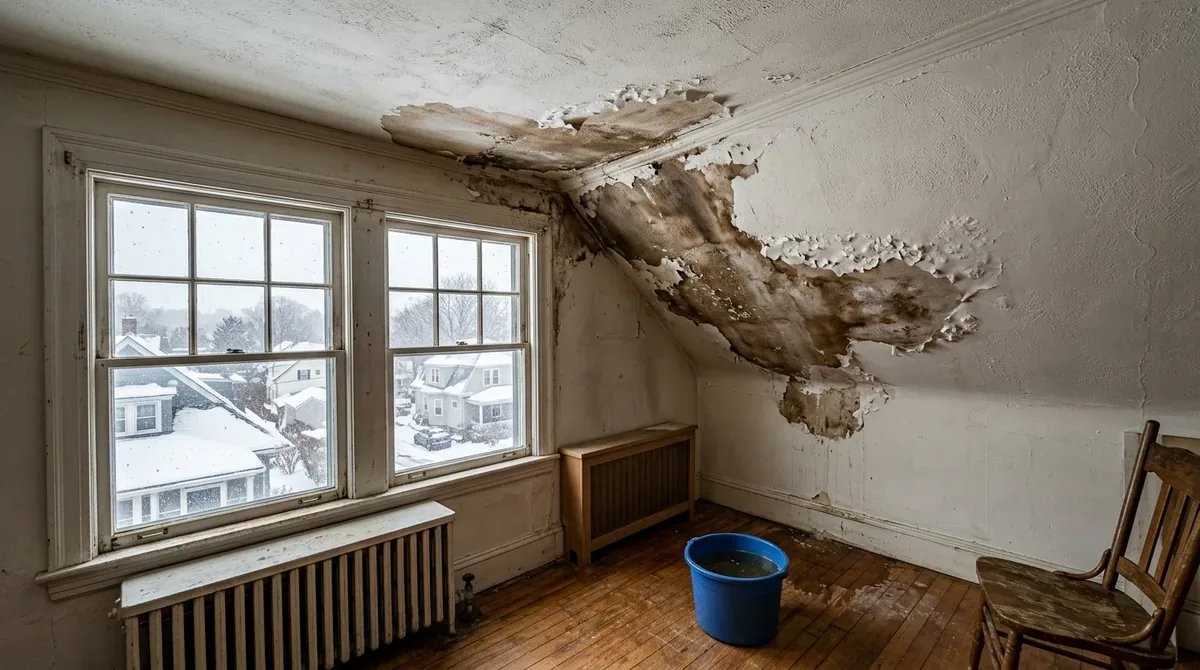
On Bunker Hill capes the classic repair is at the eaves of a finished upper story, where warm rooms melt snow that refreezes at the cold overhang. The ceiling stain shows up in a bedroom, and the fix is at the edge of the roof, not above the stain.
Most repairs on Waterbury's older houses trace back to five points: a chimney, a valley, a vent pipe boot, the eaves, and the junction where a porch or addition roof meets the house wall. The open field of shingles is rarely the problem, and the ceiling stain tells you where water ended up, not where it got in.


Most repairs are estimated at $400 to $2,000, with small jobs from about $150. In Connecticut a repair also has a ceiling: past 25 percent of the roof covering in a calendar year it stops being a repair and needs a permit. The most predictable pricing on this site: bigger lots, room to stage, and simpler roof shapes. A cape with rooms in the roof adds eaves and ventilation work that an open attic would not.
A visible, bounded failure on a slope that can be reached: a lifted shingle, a split pipe boot, one length of flashing. Found in minutes, fixed the same day.
A leak that has already been patched once, a finished attic with nowhere to look, or a third-floor roof that needs staging before anyone can touch it.
When the work adds up toward a quarter of the roof. At that point the honest conversation is about replacement, with the permit and the code that come with it.
Capes with rooms in the roof are the thing to establish first. A finished upper story changes the ventilation and makes the eaves harder to detail, and the eaves is exactly where Connecticut's ice barrier rule does its work.
On a cape, find out whether anyone sleeps up there before anything else gets decided.
Cause first, then the fix.
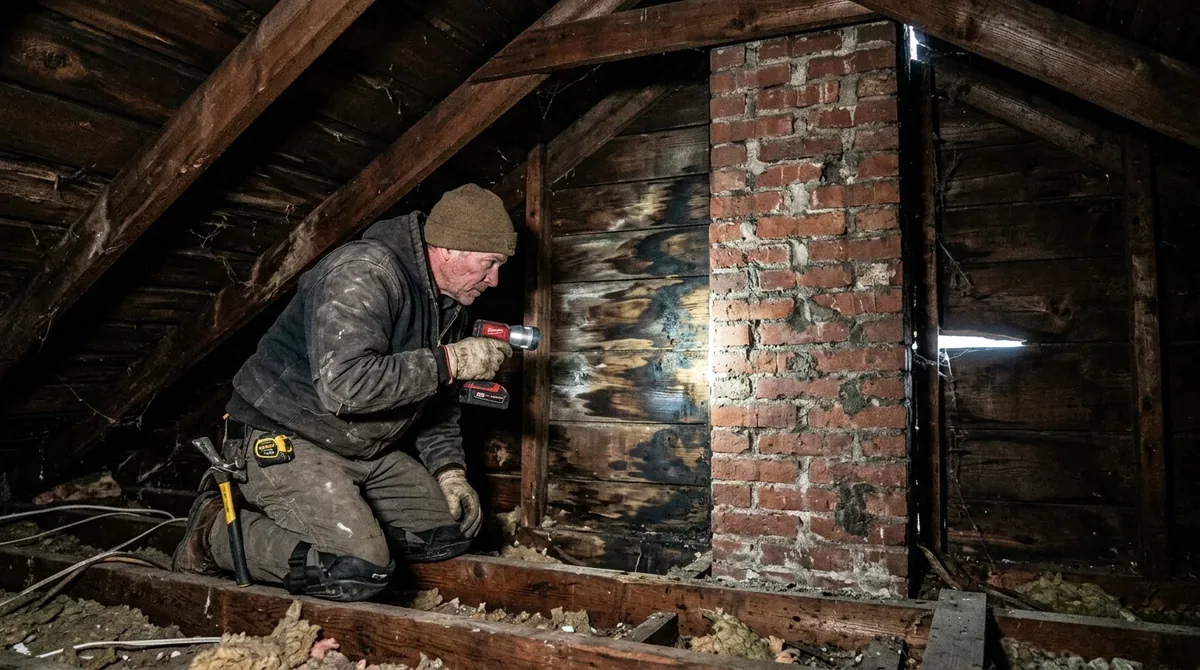
The stain says where water ended up. The attic says where it came in: tracks on the rafters, wet sheathing, daylight around a vent.
Chimney, valleys, vent boots, the eaves, and the porch or addition roof where it meets the house, because that is where most leaks on older houses here begin.
If the work stays within a quarter of the roof covering this year, it is a repair with no permit. If it does not, you hear that before anything is priced.
The most straightforward replacements in Waterbury are on Bunker Hill: bigger lots, room for a dumpster in the drive, and plainer roofs on colonials and later ranches.
Bunker Hill's emergencies are mostly ice dams on capes and storm damage on bigger, open lots where trees and wind reach the roof.
On Bunker Hill the typical flat roof is a garage, a breezeway or a rear addition on a cape or ranch, draining onto a pitched roof or a driveway.
Slate is uncommon on Bunker Hill's colonials, capes and ranches, so a slate repair here is usually on one of the older houses from the trolley-era subdivisions.
On Bunker Hill capes the chimney often rises through a finished upper story, so a flashing leak shows as damp on a bedroom wall rather than in an attic.
On Bunker Hill the inspection establishes whether the roof space is finished rooms or open attic.
One city, one permit office. The 25% line decides it.
Burnt Hill, 1897-1925. Slate and clay tile survive.
Brass-family Queen Annes. Many valleys, steep lots.
The 1674 ridge. Farmhouses and well-kept triple-deckers.
River to ridge. Triple-deckers and six-family blocks.
Rocky hills, Washington Hill and Hopeville. Access first.
Answered before anyone books a visit.
Sometimes. A small, stable leak can often be managed until the weather allows a proper repair. A leak at the eaves in winter usually cannot, because every freeze widens the gap and the water reaches more of the ceiling.
As closely as the shingles still made allow. On an older roof an exact color match is rare, so the repair is placed and blended to read as weathering rather than as a patch.
Stop patching and look in the attic. Water that gets in at a chimney, a valley or the top of a porch roof can run several feet along a rafter before it shows, so a repair directly above the stain often fixes nothing. Two failed patches is strong evidence the entry point was somewhere else.
Every quote states whether the job is a repair or a permitted replacement. The code lines named: ice barrier, deck-joint strip, layer count.