Slate Roof Repair in Town Plot, Waterbury from $500. An estimated $500 to $3,000 for most slate repairs – and the code does not allow slate to be roofed over. Free inspection and a written quote.
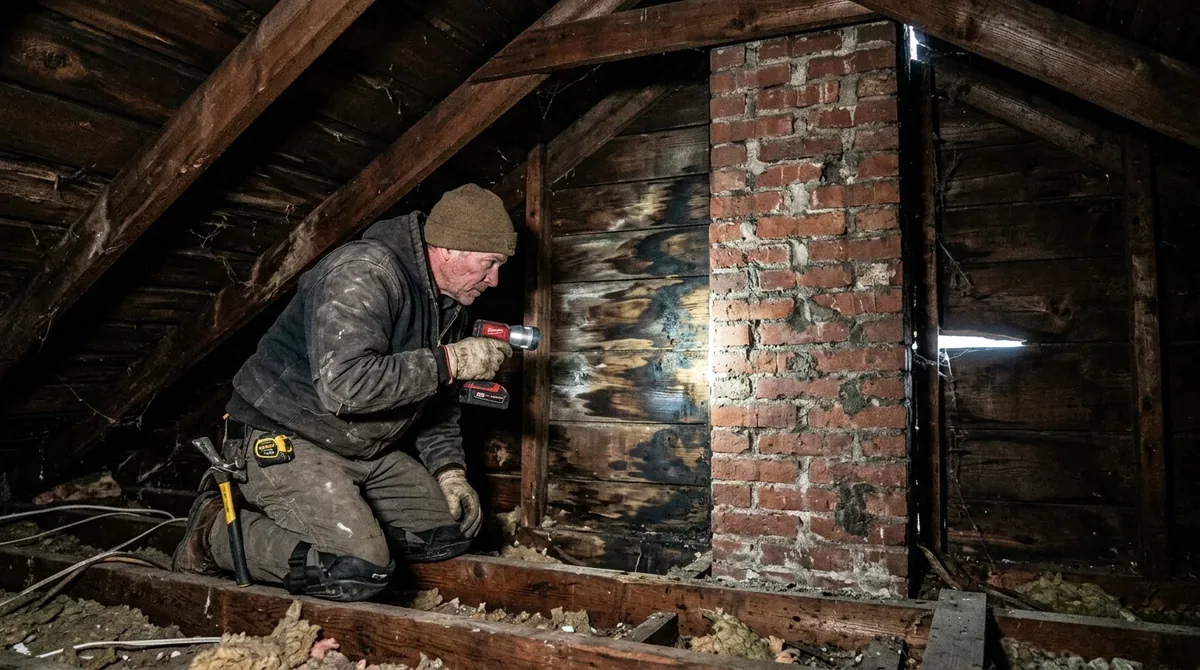
Where a Town Plot farmhouse still has slate, it may be on boards and rafters older than any record of them. A slate repair here starts by checking what the slates are nailed into, because sound stone on spent battens still slips.
Sound slate can outlast what holds it up. Slipped slates whose nails have given way, valley and chimney flashings worn through, and old repairs done in tar are what usually bring a slate roof to the point of leaking. The stone is the last thing to go: when slates flake, soften or split across the whole field, repair stops being the answer.


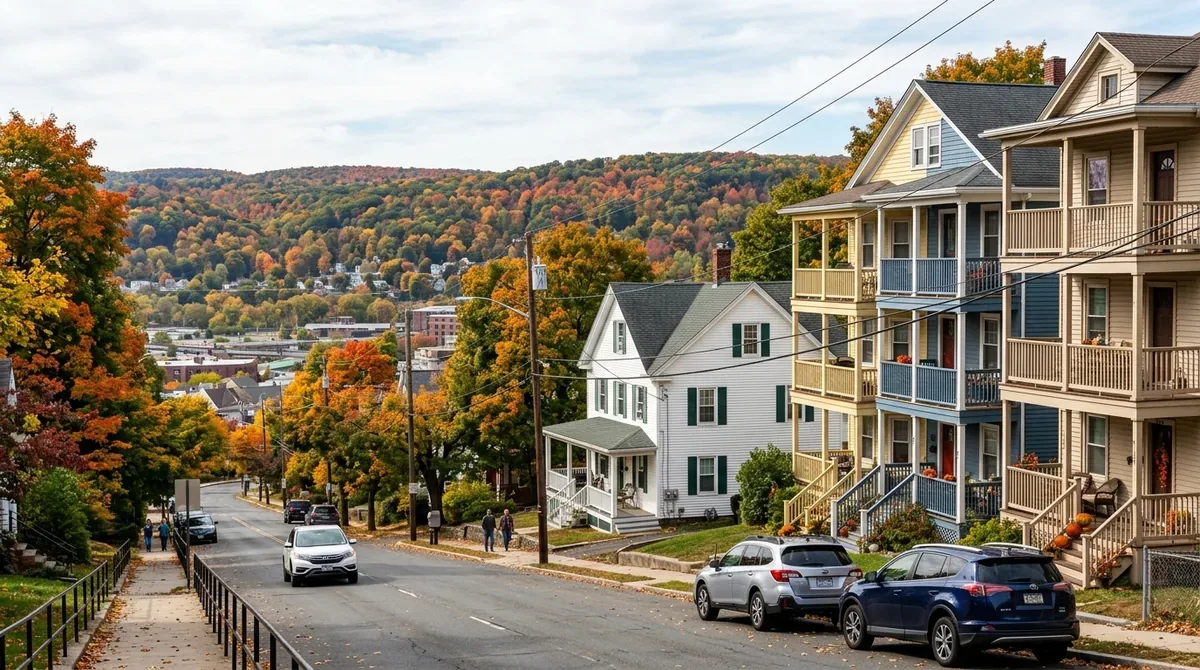
Most slate repairs are estimated at $500 to $3,000, or roughly $50 to $300 per slate. A full slate replacement is estimated at $15 to $30 or more per square foot, and the code does not allow a cheaper layer over it, so repair is where the money goes first. Owner-built frames and old farmhouse rafters are priced after the attic has been seen, not before. Well-kept triple-deckers on the ridge usually make the repair-first case.
A handful of slipped or cracked slates on a reachable slope, with sound battens and good stone around them.
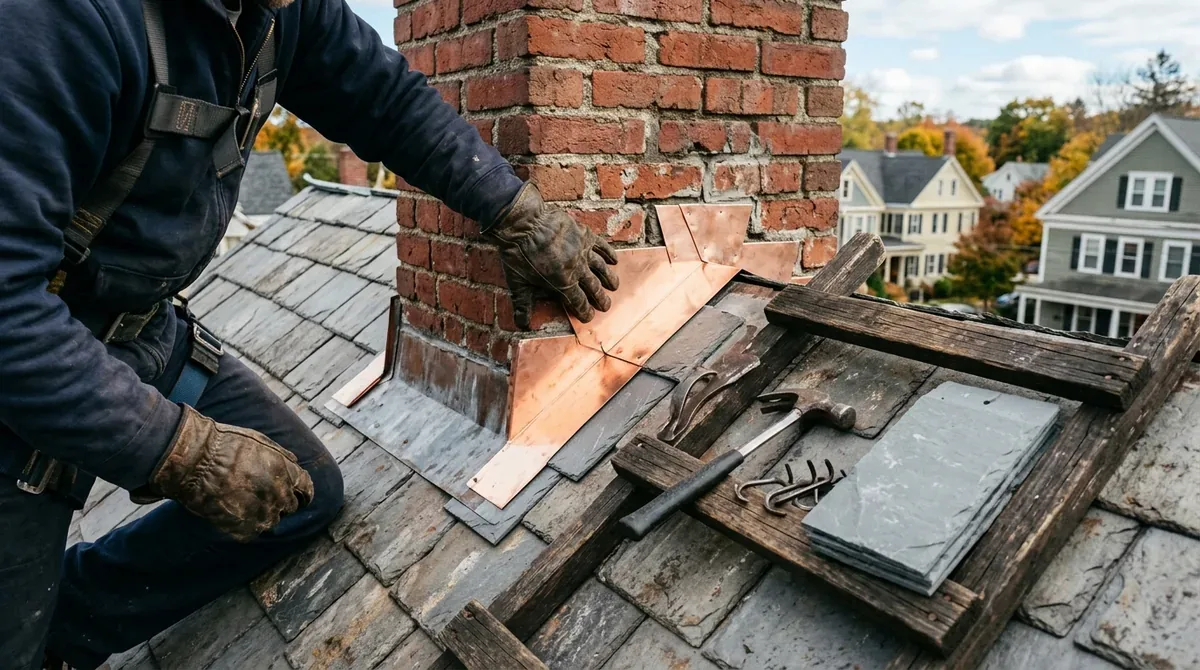
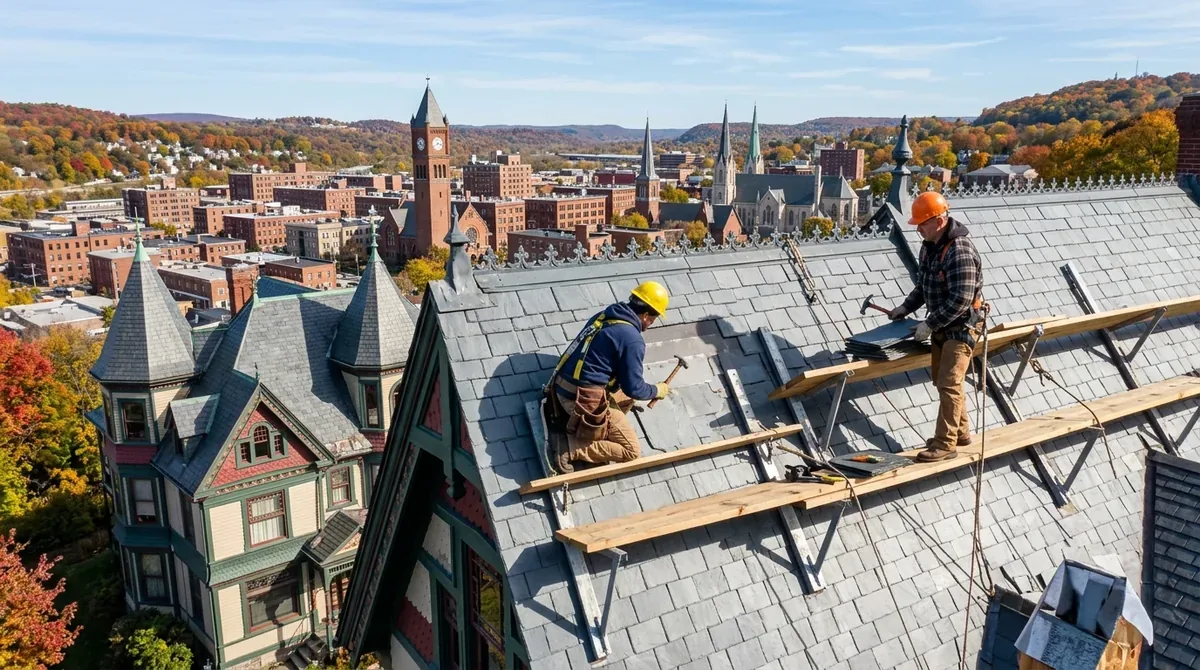
Matching old stone, steep pitches, dormers and valleys, and failed flashings under the slate rather than in it.
When the slates themselves are delaminating across the field. Until then, a slate roof is usually worth keeping.
Owner-built houses are the ones where no two roof frames can be assumed alike, and a farmhouse roof may sit on rafters older than any record of them. Every frame here gets looked at from the attic before it gets priced.
On the ridge, a well-kept triple-decker is worth keeping well: repair under the line before it becomes a replacement over it.
The stone is never stood on.
Replacements are matched for size, thickness and color, from salvage or new stock, because a mismatched slate shows from the street for decades.
New slates go in on slate hooks or copper nails, never face-nailed and tarred.
You get a written view of the field: how much good stone is left, and whether repair still makes sense.
On the Town Plot ridge a replacement has to start in the attic.
Town Plot's well-kept triple-deckers are exactly the roofs worth repairing under the 25 percent line rather than replacing over it.
On the ridge, wind finds the roof first.
Town Plot's flat roofs are often later additions to old farmhouses and owner-built homes, framed by whoever built them.
Old farmhouse chimneys on Town Plot can have mortar too eroded to hold counter-flashing until it has been raked and repointed.
On Town Plot the inspection is mostly in the attic: rafters, boards and how an owner-built or farmhouse frame was put together.
One city, one permit office. The 25% line decides it.
Burnt Hill, 1897-1925. Slate and clay tile survive.
Brass-family Queen Annes. Many valleys, steep lots.
Trolley-era half-acre lots. Capes with rooms upstairs.
River to ridge. Triple-deckers and six-family blocks.
Rocky hills, Washington Hill and Hopeville. Access first.
Answered before anyone books a visit.
No. Tar over slate holds water against the stone, hides the real failure and makes the next repair harder. A slipped or broken slate is replaced and hung on a slate hook or a copper nail.
No. The building code does not allow a new covering to be installed over slate. The choices are to repair the slate or remove it, which is why a careful repair is worth so much on a slate roof that still has good stone.
Roughly $50 to $300 per slate as an estimate, depending on access and the stone. Most slate repairs land between $500 and $3,000, because several slates and the flashing near them are usually done at once.
Every quote states whether the job is a repair or a permitted replacement. The code lines named: ice barrier, deck-joint strip, layer count.