Emergency Roof Repair in Bunker Hill, Waterbury from $400. Temporary cover tonight, estimated at $400 to $1,500 – and no permanent contract signed under a wet ceiling. Free inspection and a written quote.
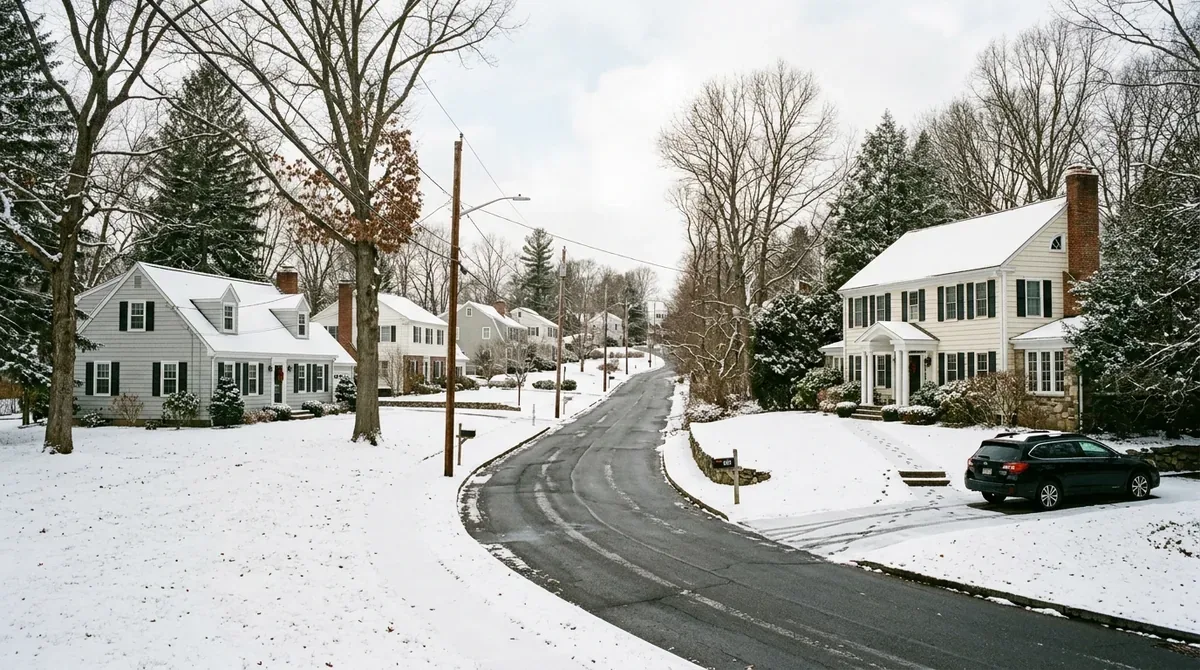
Bunker Hill's emergencies are mostly ice dams on capes and storm damage on bigger, open lots where trees and wind reach the roof. The cover goes on first, and on a cape the bedroom ceiling below often needs opening to dry out.
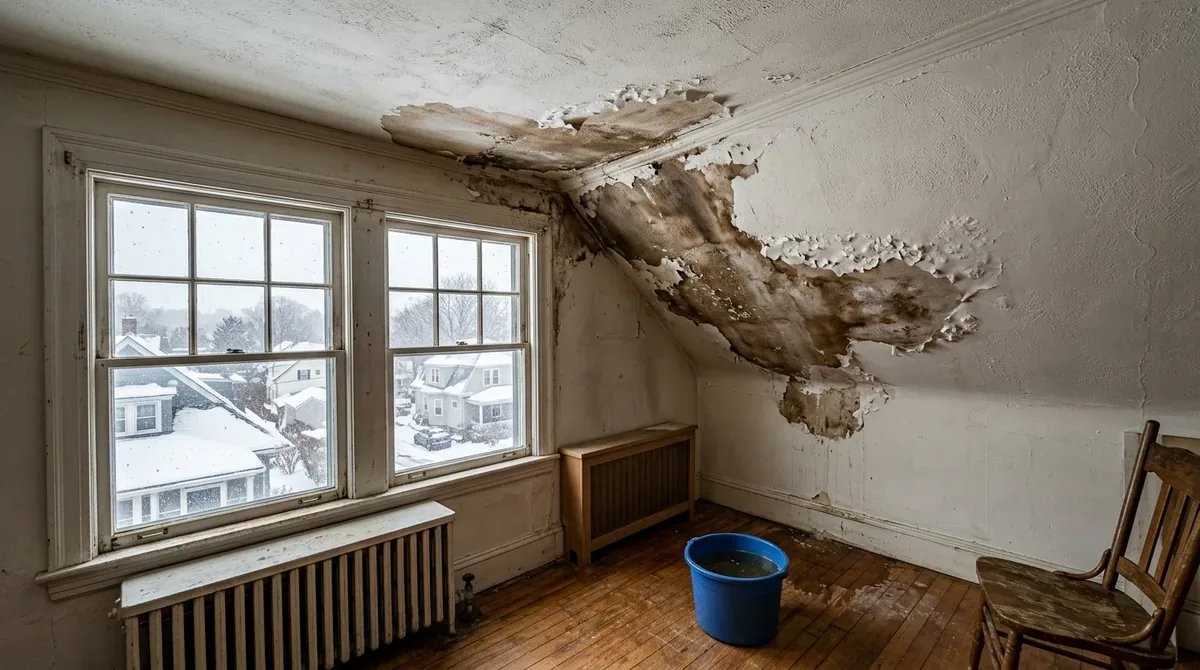
Emergencies here come in two kinds. Wind lifts or tears shingles at a rake, a ridge or a porch-roof edge, and the opening is plain to see. Ice is quieter: a dam forms at a cold eave, meltwater backs up under the courses and comes through a top-floor ceiling with nothing visibly wrong from the street. The first gets covered; the second also needs the dam opened, or the cover only moves the leak.


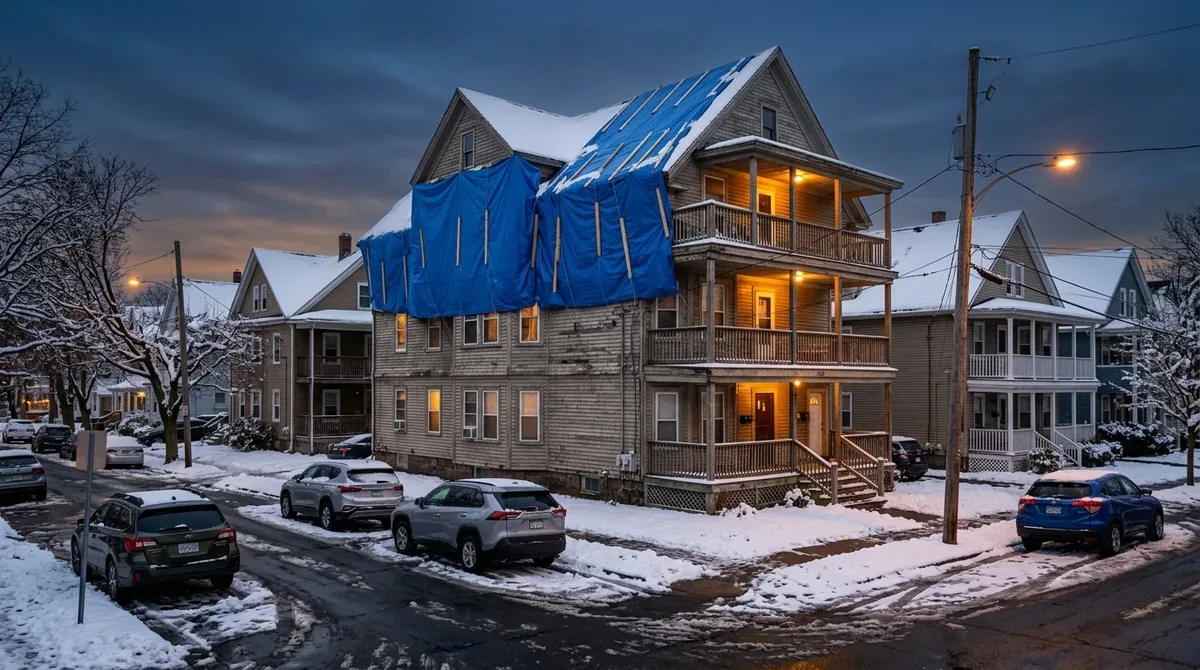
Temporary cover is estimated at $400 to $1,500 for most homes and is quoted as its own job. It is kept apart from the permanent repair on purpose, so that no five-figure decision gets made while water is still coming in. The most predictable pricing on this site: bigger lots, room to stage, and simpler roof shapes. A cape with rooms in the roof adds eaves and ventilation work that an open attic would not.
Calling while it is light and while the opening is still small. A slope left open through two storms is a bigger job than the same slope after one.
Height, pitch and weather at the time: a third-floor roof in wind, ice on the slope, or a flat roof with no eave to lap a cover over.
Ask anyone to sign for a permanent repair at the callout. Connecticut gives three business days to cancel a home improvement contract, Saturday included.
Capes with rooms in the roof are the thing to establish first. A finished upper story changes the ventilation and makes the eaves harder to detail, and the eaves is exactly where Connecticut's ice barrier rule does its work.
On a cape, find out whether anyone sleeps up there before anything else gets decided.
Water stopped first, decisions later.
Ladder footing, wind and ice decide what can be done after dark. If a roof cannot be worked safely, the water is managed inside until first light.
A tarp battened over the opening and lapped well past it so wind cannot get under; on an ice-dam leak, a channel opened through the dam so the meltwater can drain.
Before anything is covered, the failure is photographed, so the permanent repair is quoted from evidence rather than memory.
The most straightforward replacements in Waterbury are on Bunker Hill: bigger lots, room for a dumpster in the drive, and plainer roofs on colonials and later ranches.
On Bunker Hill capes the classic repair is at the eaves of a finished upper story, where warm rooms melt snow that refreezes at the cold overhang.
On Bunker Hill the typical flat roof is a garage, a breezeway or a rear addition on a cape or ranch, draining onto a pitched roof or a driveway.
Slate is uncommon on Bunker Hill's colonials, capes and ranches, so a slate repair here is usually on one of the older houses from the trolley-era subdivisions.
On Bunker Hill capes the chimney often rises through a finished upper story, so a flashing leak shows as damp on a bedroom wall rather than in an attic.
On Bunker Hill the inspection establishes whether the roof space is finished rooms or open attic.
One city, one permit office. The 25% line decides it.
Burnt Hill, 1897-1925. Slate and clay tile survive.
Brass-family Queen Annes. Many valleys, steep lots.
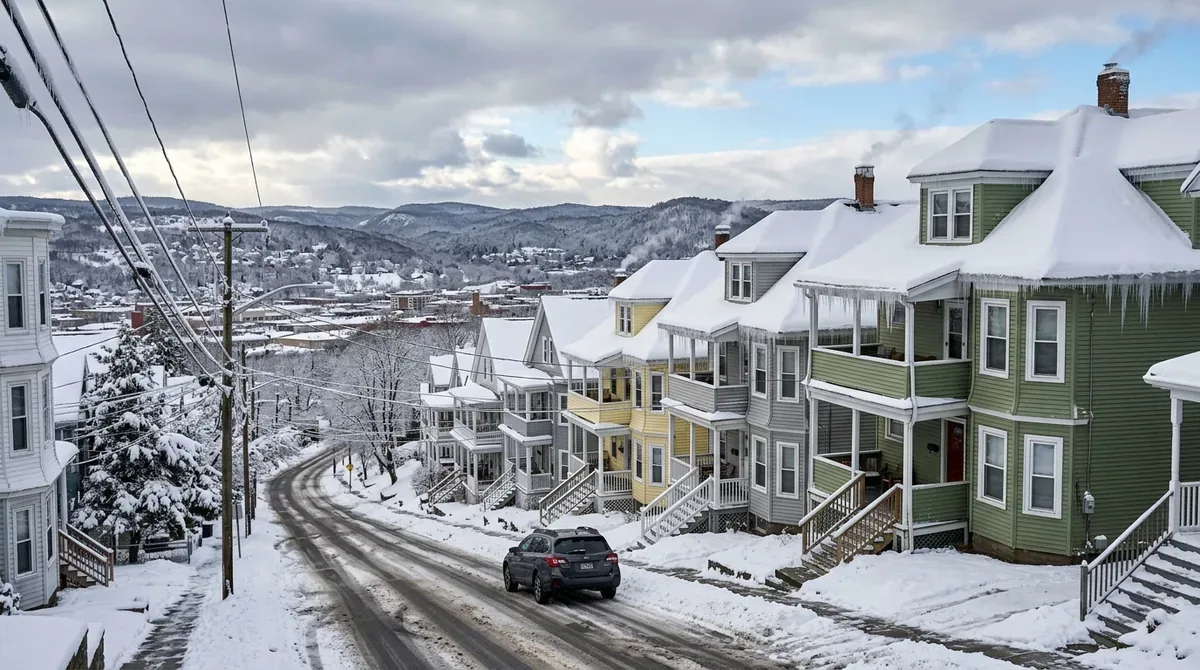
The 1674 ridge. Farmhouses and well-kept triple-deckers.
River to ridge. Triple-deckers and six-family blocks.
Rocky hills, Washington Hill and Hopeville. Access first.
Answered before anyone books a visit.
Move belongings away from the leak and put a bucket down. Keep clear of any wet ceiling near a light fitting, and switch that circuit off if you can do so safely. Photograph the damage before anything is moved.
When water is coming through a ceiling, yes. The cover deals with tonight. The cause, usually missing or short ice barrier at the eaves, is the repair to plan once the weather allows.
No, and nobody should ask you to. Connecticut gives you until midnight of the third business day to cancel a home improvement contract, Saturday included, so nothing is gained by deciding while water is still coming through the ceiling.
Every quote states whether the job is a repair or a permitted replacement. The code lines named: ice barrier, deck-joint strip, layer count.