Roof Inspection in Brooklyn, Waterbury from free with a quote. Free with a quote – and a straight answer to whether a 20-year-old roof needs replacing yet. Free inspection and a written quote.
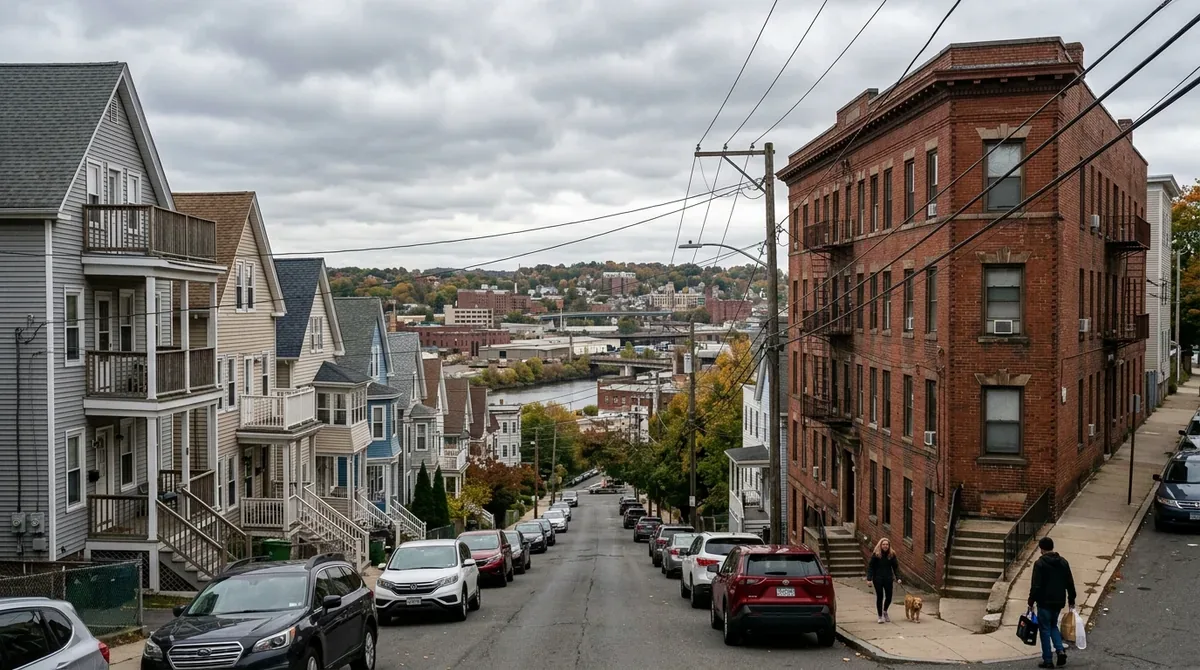
In Brooklyn the inspection starts with the building: how many units, and therefore which code and what permit. On a six-family block it covers the parapets and outlets as well as the slope.
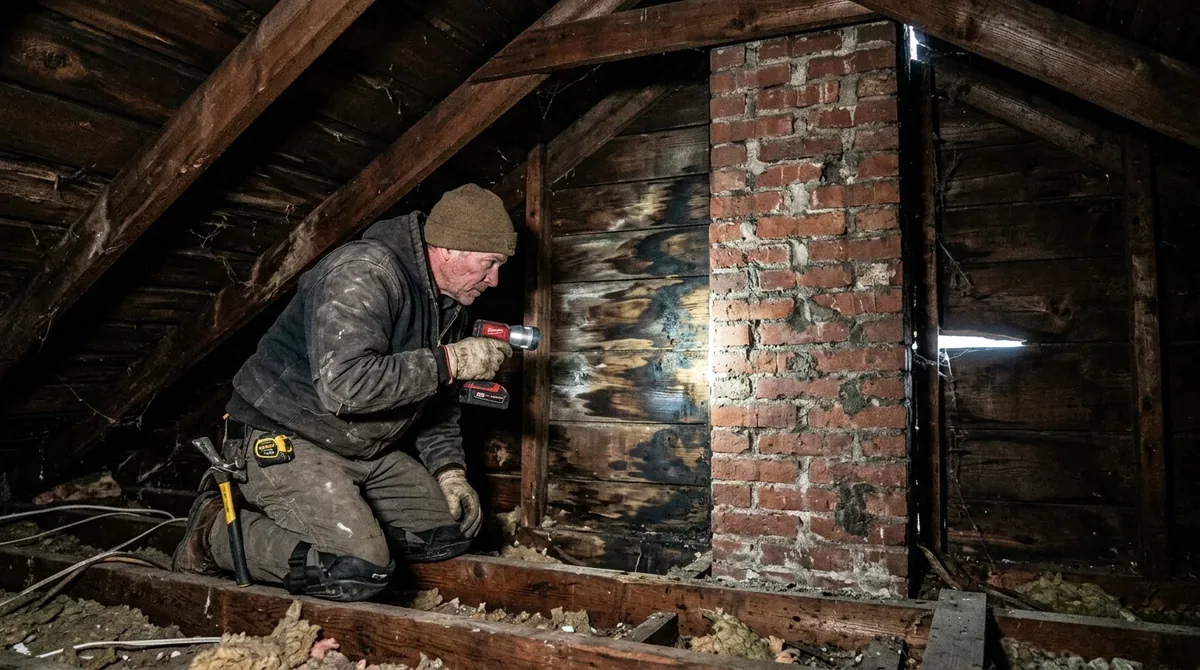
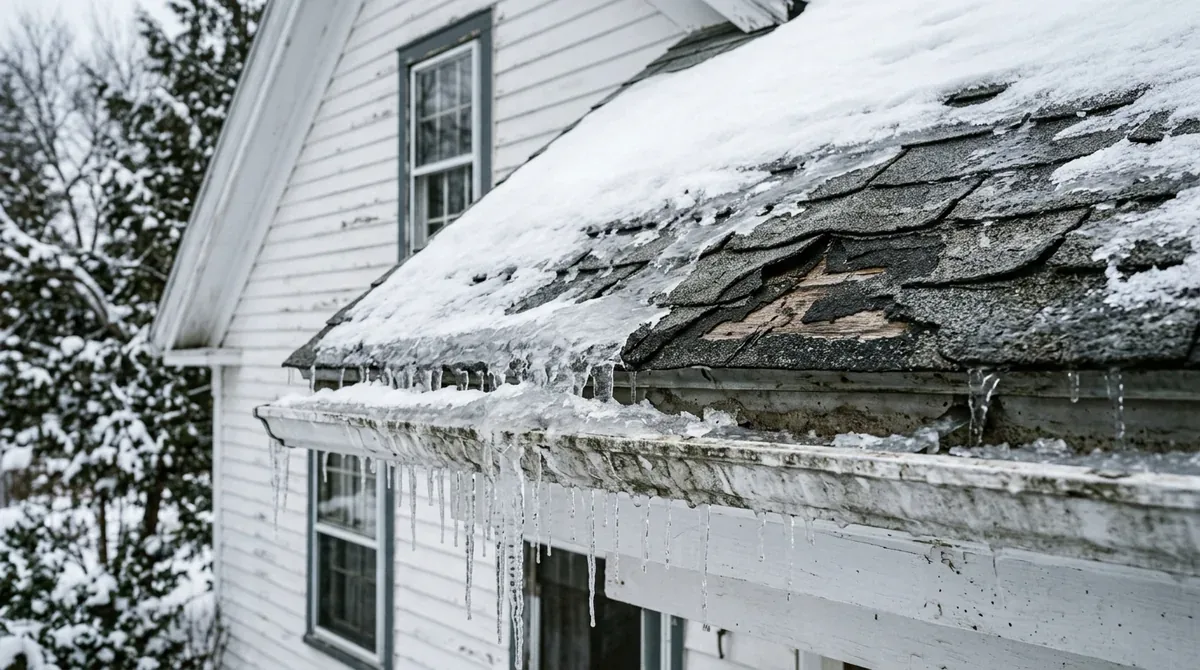
An inspection looks for what gives a roof's age away before it leaks: granule loss and curl on the shingles, cracked pipe boots, flashings lifting or buried in caulk, soft spots in the deck, and in the attic, water tracks, daylight and frost on the nail tips in winter. The point is to find what is failing while it is still a repair.


The inspection is free when it comes with a quote, and the repairs that usually follow are estimated at $400 to $2,000. Every report says where the work falls against Connecticut's 25 percent line. Density sets the price: where staging can stand, where a dumpster can go, and whether the building is a triple-decker or a six-family block permitted as a larger building.
Slope, the details that fail, attic, deck and layer count, with photographs and a written view on remaining life – including when that view is that nothing needs doing.
Age is a prompt, not a verdict. The report says whether a twenty-year-old roof has years left or none, and why.
Whether what needs doing is a repair under the 25 percent line or a replacement over it, stated before anyone prices it.
Six-family blocks are past the size of building the residential code covers, so their roofs are permitted as larger buildings. On close-set triple-deckers the constraint is room to work: staging, a dumpster, and three floors of households.
Here the plan for the street – where the ladder stands and where the tear-off goes – is part of the quote.
Outside, inside, the line, and a written report.
Shingles, flashings, vents, valleys and eaves, photographed from the roof or a ladder.
A plain statement of whether what is needed is a repair under Connecticut's 25 percent line or a permitted replacement.
Photographs, a view on remaining life, and what to do first, in writing, even when the answer is nothing yet.
In Brooklyn the building decides the paperwork.
In Brooklyn's dense blocks a repair is often at a junction shared with the house next door, or on a roof three floors up over two rented apartments.
A leak in a Brooklyn triple-decker or six-family block reaches more than one household.
Brooklyn has the most genuinely flat roofing on this site: six-family blocks, tenements and storefronts as well as porch roofs.
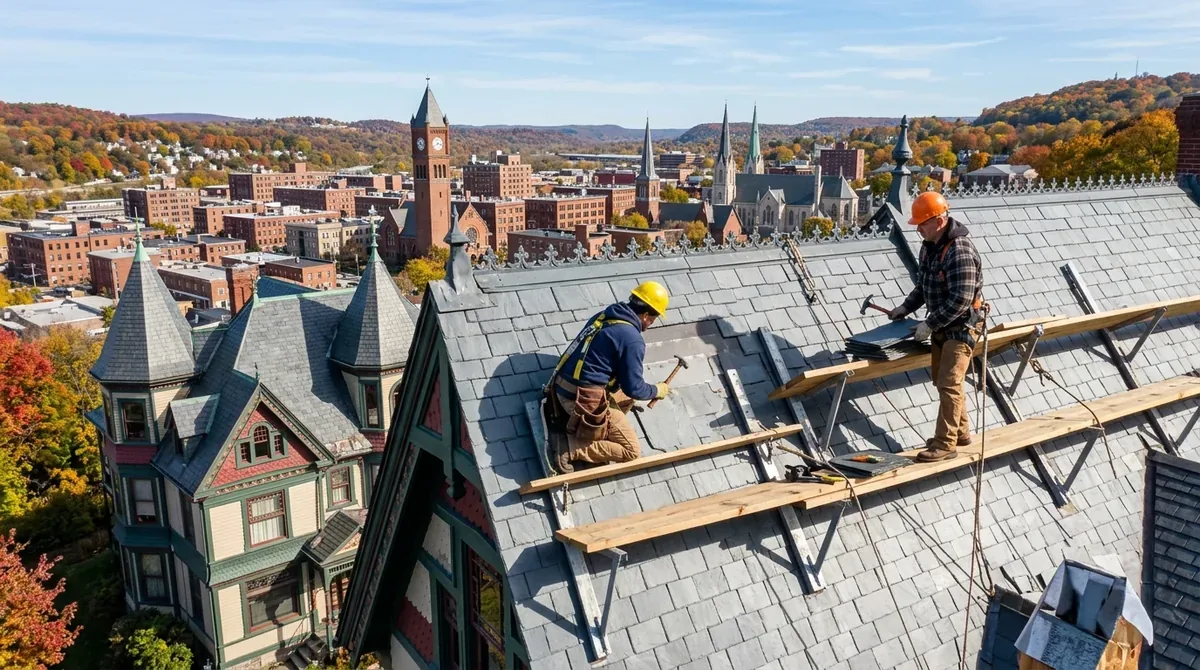
Slate is rare on Brooklyn's triple-deckers and blocks, but where an older building keeps it, the dense street makes access the hard part: staging that does not land on the neighbor's roof, and no one walking the slate..
Brooklyn's triple-deckers and blocks often carry several flues through one roof, and a failed flashing can put water into a unit some distance away.
One city, one permit office. The 25% line decides it.
Burnt Hill, 1897-1925. Slate and clay tile survive.
Brass-family Queen Annes. Many valleys, steep lots.
Trolley-era half-acre lots. Capes with rooms upstairs.
The 1674 ridge. Farmhouses and well-kept triple-deckers.
Rocky hills, Washington Hill and Hopeville. Access first.
Answered before anyone books a visit.
Yes, in writing. If the roof has years left, that is what the report says. A report that finds fault every time is not an inspection, it is a sales visit.
Yes. Every report states whether the work it recommends is a repair under Connecticut's 25 percent line or a replacement that needs a permit from the Department of Inspections, before anyone puts a price on it.
Once a roof reaches fifteen to twenty years, every year or two is sensible, and after any storm that brings down branches or leaves ice along the eaves. Sooner if the attic shows water tracks.
Every quote states whether the job is a repair or a permitted replacement. The code lines named: ice barrier, deck-joint strip, layer count.