Flat Roofing in Brooklyn, Waterbury from $4. An estimated $4 to $10 a square foot – on porch roofs, rear additions and the city's multi-family blocks. Free inspection and a written quote.
Brooklyn has the most genuinely flat roofing on this site: six-family blocks, tenements and storefronts as well as porch roofs. On a larger block the outlets and parapet walls matter more than the membrane, and the permit is for a larger building.
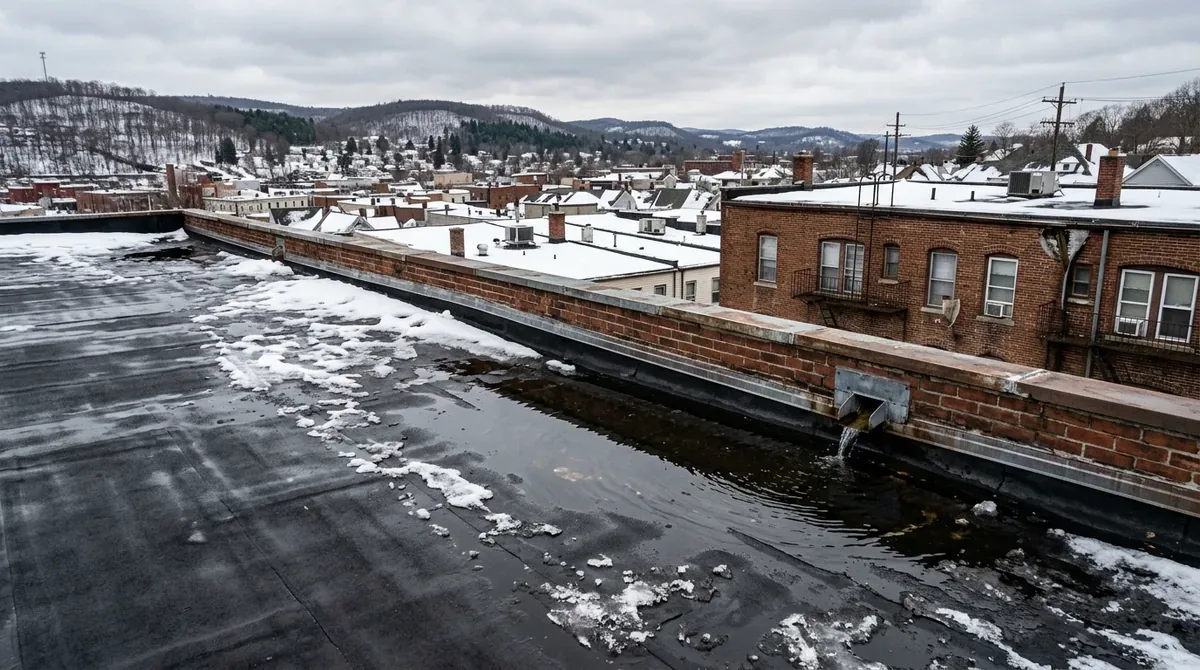
A low-slope roof rarely fails in the middle of the membrane. It fails at the edges: where the membrane turns up a wall and was only sealed, at a scupper or drain sitting a little higher than the roof around it, and along seams that standing water tests every day. Snow drifting against a wall adds weight and holds meltwater against exactly those edges.


Low-slope roofing is estimated at $4 to $10 per square foot installed across EPDM, TPO and modified bitumen. In this city it is mostly porch roofs, rear additions, garages, storefronts and the larger multi-family blocks. Density sets the price: where staging can stand, where a dumpster can go, and whether the building is a triple-decker or a six-family block permitted as a larger building.
A simple rectangle with real fall on it, reachable from the ground, draining to an outlet that is actually at the low point.
Walls and parapets. Every upstand has to be turned up and terminated, and every drift zone against a wall needs the snow load allowed for.
A membrane run up a wall and finished with sealant. An upstand is dressed and mechanically fixed; sealant is a finish, not a fixing.
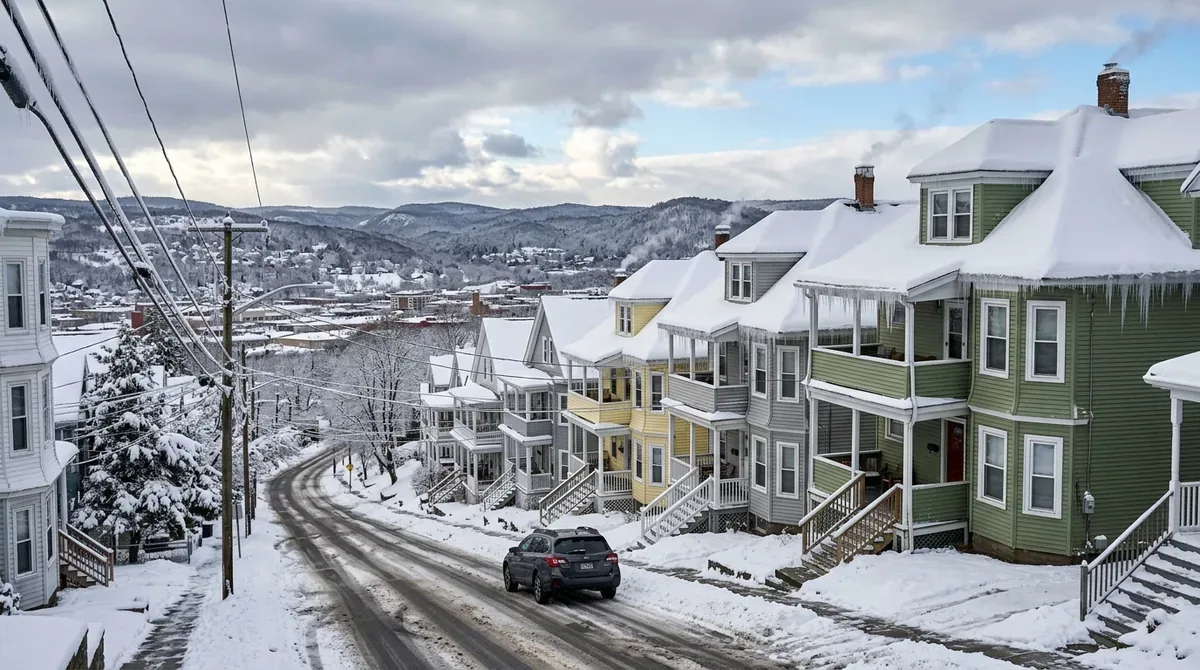
Six-family blocks are past the size of building the residential code covers, so their roofs are permitted as larger buildings. On close-set triple-deckers the constraint is room to work: staging, a dumpster, and three floors of households.
Here the plan for the street – where the ladder stands and where the tear-off goes – is part of the quote.
Drainage and edges before the membrane.
Where water actually sits is checked first. An outlet that is not at the low point keeps a pond on the roof whatever membrane goes down.
EPDM, TPO or modified bitumen, chosen by foot traffic, penetrations and how the roof meets its walls, and priced side by side.
Every upstand is turned up and fixed with a termination bar or counter-flashing. Sealant finishes the detail; it does not hold it.
In Brooklyn the building decides the paperwork.
In Brooklyn's dense blocks a repair is often at a junction shared with the house next door, or on a roof three floors up over two rented apartments.
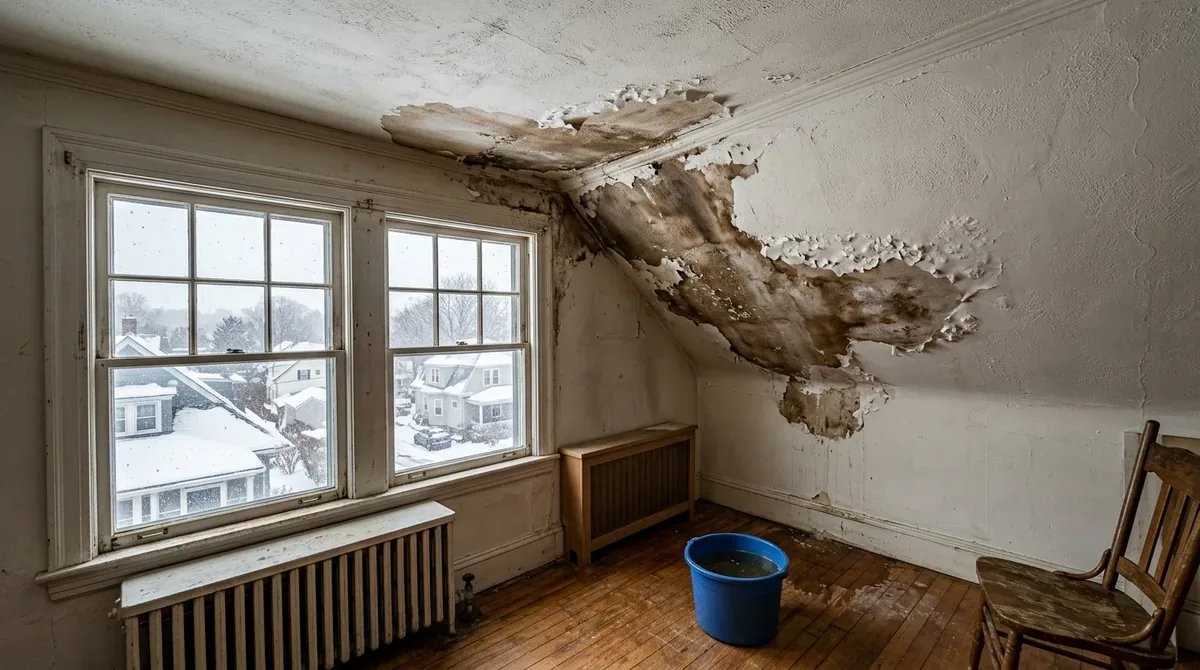
A leak in a Brooklyn triple-decker or six-family block reaches more than one household.
Slate is rare on Brooklyn's triple-deckers and blocks, but where an older building keeps it, the dense street makes access the hard part: staging that does not land on the neighbor's roof, and no one walking the slate..
Brooklyn's triple-deckers and blocks often carry several flues through one roof, and a failed flashing can put water into a unit some distance away.
In Brooklyn the inspection starts with the building: how many units, and therefore which code and what permit.
One city, one permit office. The 25% line decides it.
Burnt Hill, 1897-1925. Slate and clay tile survive.
Brass-family Queen Annes. Many valleys, steep lots.
Trolley-era half-acre lots. Capes with rooms upstairs.
The 1674 ridge. Farmhouses and well-kept triple-deckers.
Rocky hills, Washington Hill and Hopeville. Access first.
Answered before anyone books a visit.
Not if it clears within a day or two of rain. Water still sitting a week later is a seam being tested every day, and it usually means the fall does not run where it should or the outlet is not at the low point. In winter that same hollow fills with ice.
Each is sound when it is detailed properly, and all three are estimated at roughly $4 to $10 a square foot installed. The choice usually follows the roof: foot traffic, how many penetrations it has, and how it meets the walls around it. The upstands and the outlets matter more than the membrane.
The weight is designed for: Waterbury's code snow load is 35 pounds per square foot. What snow does is hold meltwater against walls and outlets for weeks, which is exactly where a weak edge leaks.
Every quote states whether the job is a repair or a permitted replacement. The code lines named: ice barrier, deck-joint strip, layer count.