Flat Roofing in Hillside, Waterbury from $4. An estimated $4 to $10 a square foot – on porch roofs, rear additions and the city's multi-family blocks. Free inspection and a written quote.
On the Hillside, flat roofs sit on porches, bays and the later apartment buildings among the Queen Annes. On a steep lot a low slope that drains toward the hill rather than away from it is a common, expensive mistake.
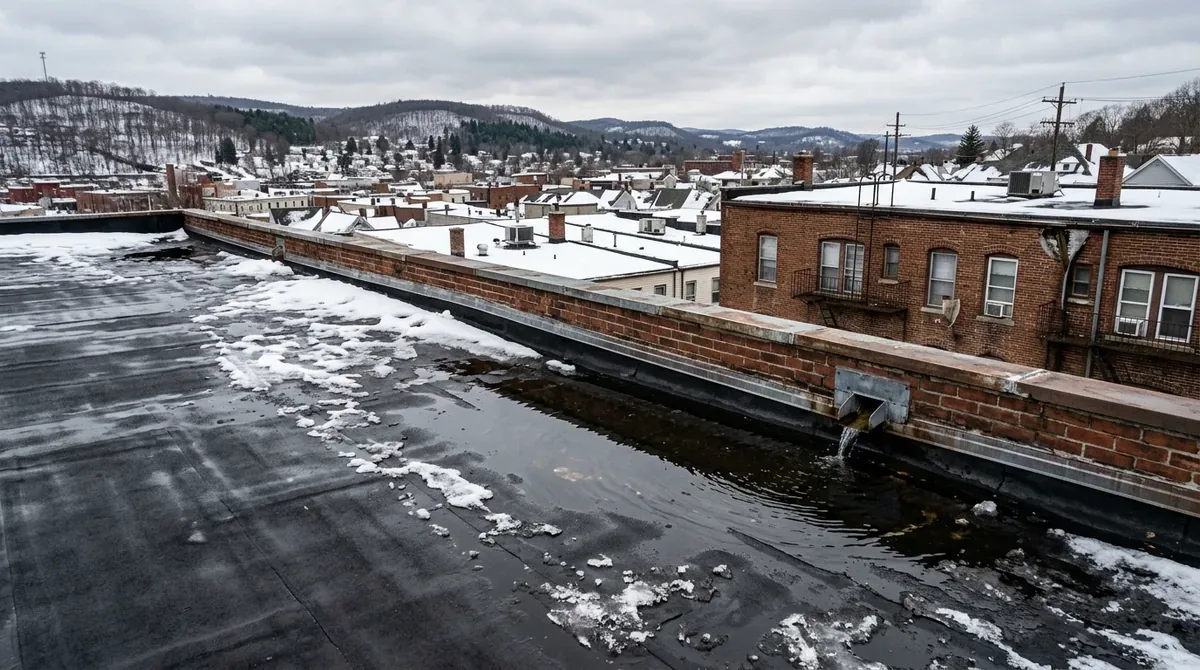
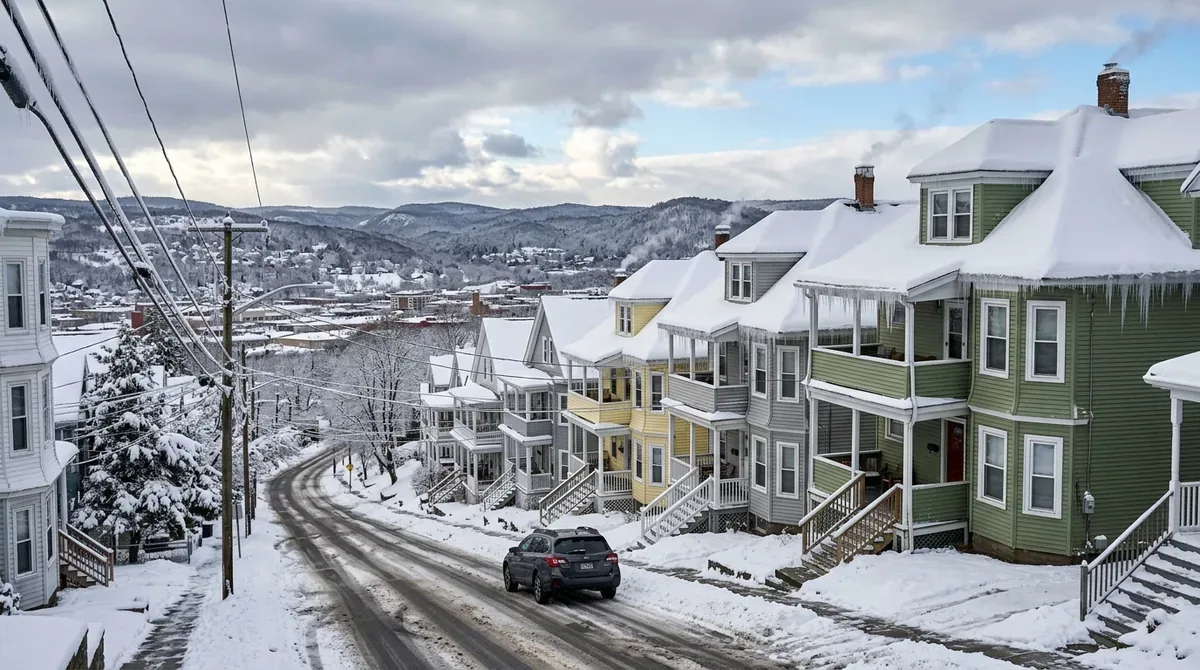
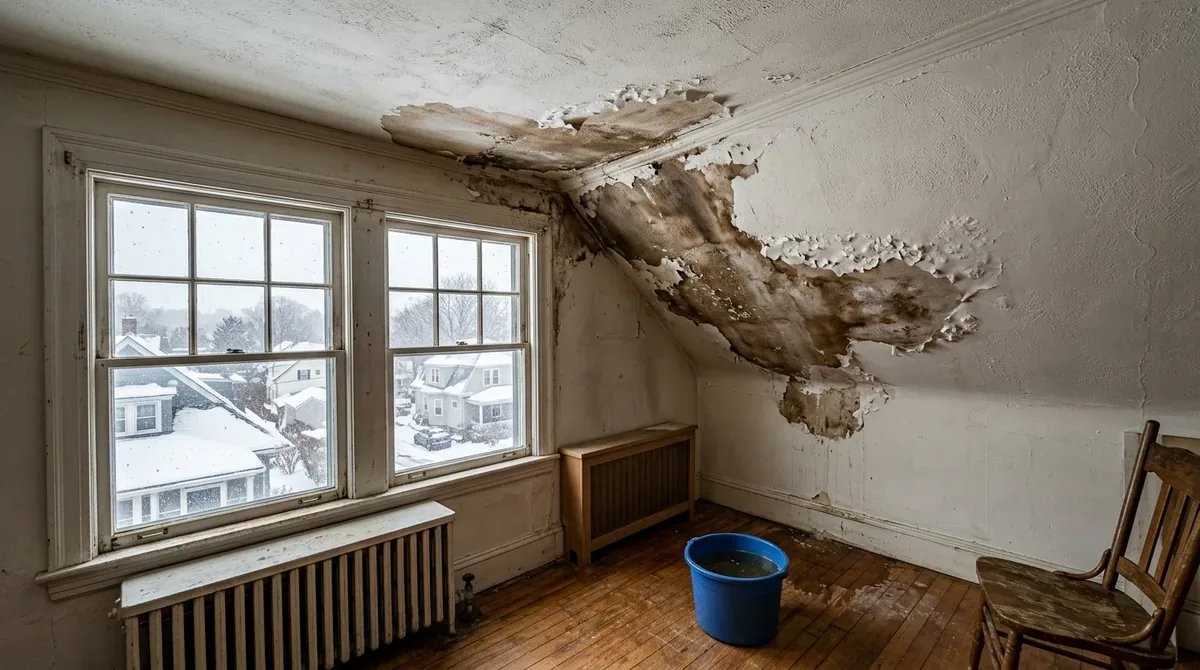
A low-slope roof rarely fails in the middle of the membrane. It fails at the edges: where the membrane turns up a wall and was only sealed, at a scupper or drain sitting a little higher than the roof around it, and along seams that standing water tests every day. Snow drifting against a wall adds weight and holds meltwater against exactly those edges.


Low-slope roofing is estimated at $4 to $10 per square foot installed across EPDM, TPO and modified bitumen. In this city it is mostly porch roofs, rear additions, garages, storefronts and the larger multi-family blocks. Staging on a steep lot and roofs with many planes and valleys are the real lines here. Two Queen Annes of the same floor area can be priced far apart because one has twice the valleys.
A simple rectangle with real fall on it, reachable from the ground, draining to an outlet that is actually at the low point.
Walls and parapets. Every upstand has to be turned up and terminated, and every drift zone against a wall needs the snow load allowed for.
A membrane run up a wall and finished with sealant. An upstand is dressed and mechanically fixed; sealant is a finish, not a fixing.
The most complicated roofs in the city: many planes, many valleys, steep dormers, on lots that fall away sharply. Staging on the slope is as much of the price as the covering.
On a roof with this many valleys, the valley detail is where the budget should go first.
Drainage and edges before the membrane.
Where water actually sits is checked first. An outlet that is not at the low point keeps a pond on the roof whatever membrane goes down.
Upstands at walls and parapets are opened and inspected, because that is where low-slope roofs here fail, worst where snow drifts against them.
Every upstand is turned up and fixed with a termination bar or counter-flashing. Sealant finishes the detail; it does not hold it.
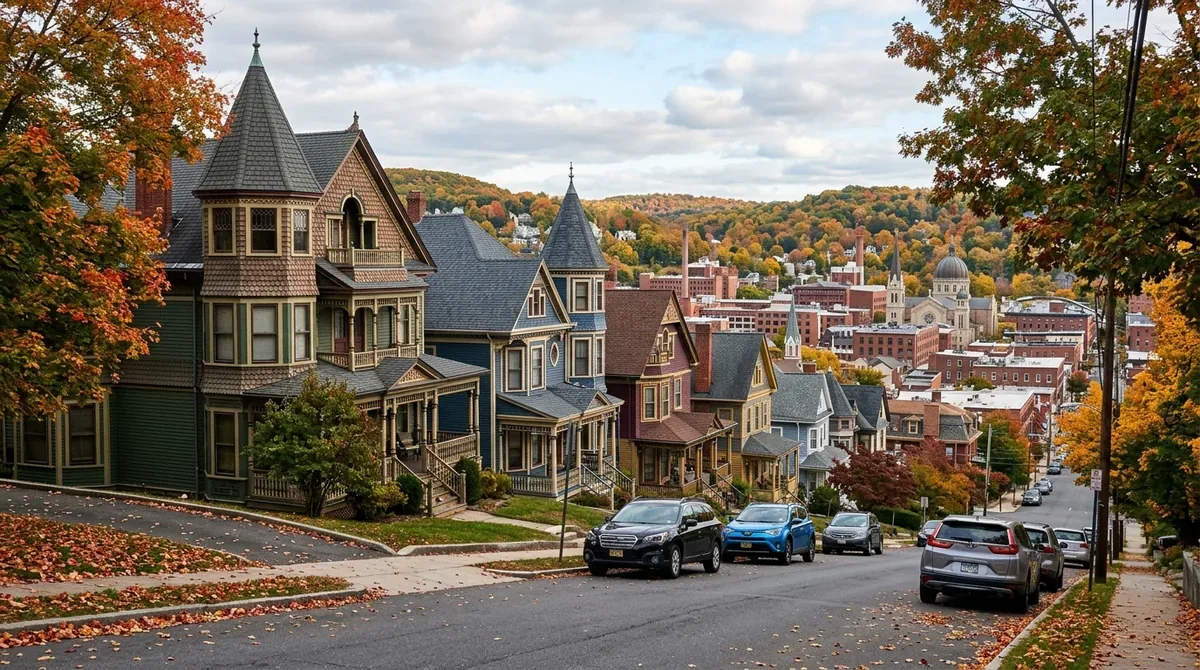
A Queen Anne on the Hillside is the most expensive roof shape in the city to replace: many planes, many valleys, steep dormers, and a lot that falls away under the staging.
On a Hillside Queen Anne the recurring repair is almost always a valley or a dormer cheek.
On the Hillside's steep lots a night callout is limited by where a ladder can safely stand.
Where a Hillside house still carries slate, its steep, broken roof lines make every repair an access problem first.
The Hillside's big houses often have several tall chimneys rising through steep, complicated roofs.
On a Hillside Queen Anne the inspection counts valleys, dormers and junctions as carefully as it measures area, because that is where these roofs fail and where their price comes from.
One city, one permit office. The 25% line decides it.
Burnt Hill, 1897-1925. Slate and clay tile survive.
Trolley-era half-acre lots. Capes with rooms upstairs.
The 1674 ridge. Farmhouses and well-kept triple-deckers.
River to ridge. Triple-deckers and six-family blocks.
Rocky hills, Washington Hill and Hopeville. Access first.
Answered before anyone books a visit.
It depends far more on the edges and the drainage than on the membrane. A well-detailed low-slope roof with its outlets at the low point lasts many years; one that ponds against a sealed upstand fails early whatever it is made of.
The weight is designed for: Waterbury's code snow load is 35 pounds per square foot. What snow does is hold meltwater against walls and outlets for weeks, which is exactly where a weak edge leaks.
Not if it clears within a day or two of rain. Water still sitting a week later is a seam being tested every day, and it usually means the fall does not run where it should or the outlet is not at the low point. In winter that same hollow fills with ice.
Every quote states whether the job is a repair or a permitted replacement. The code lines named: ice barrier, deck-joint strip, layer count.