Flat Roofing in Overlook, Waterbury from $4. An estimated $4 to $10 a square foot – on porch roofs, rear additions and the city's multi-family blocks. Free inspection and a written quote.
Flat roofing in Overlook is mostly porch roofs and rear additions on otherwise pitched houses – and where the main roof is slate or tile, the junction between the two is the detail that leaks. The membrane has to turn up under the slate, not stop at it.
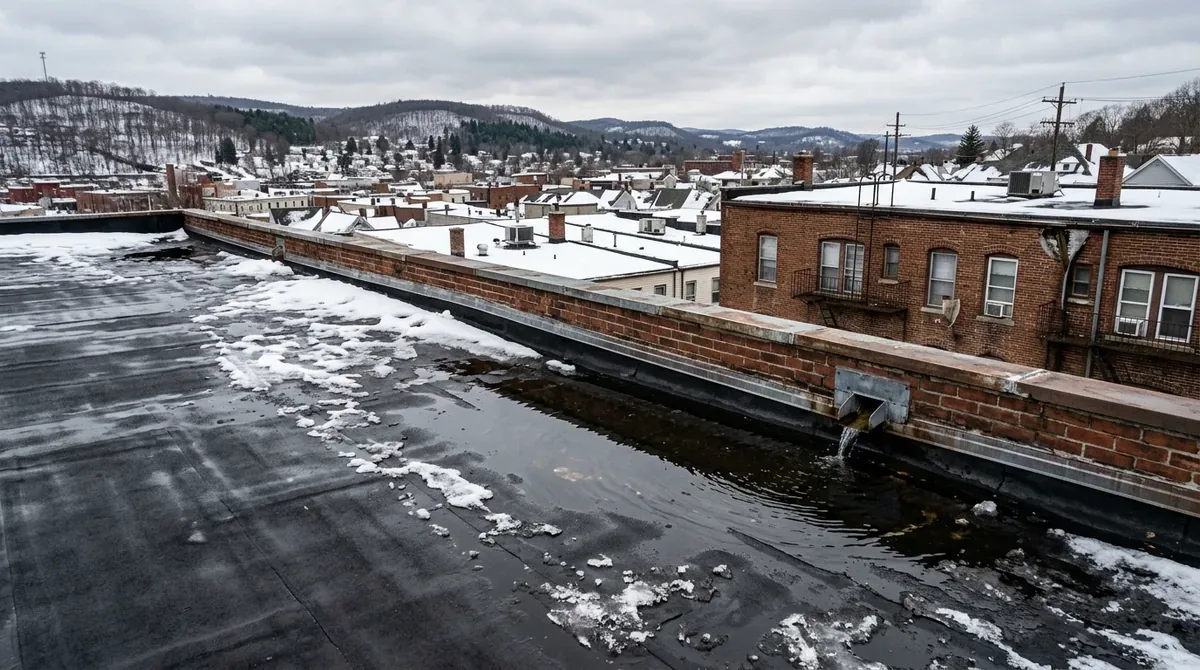
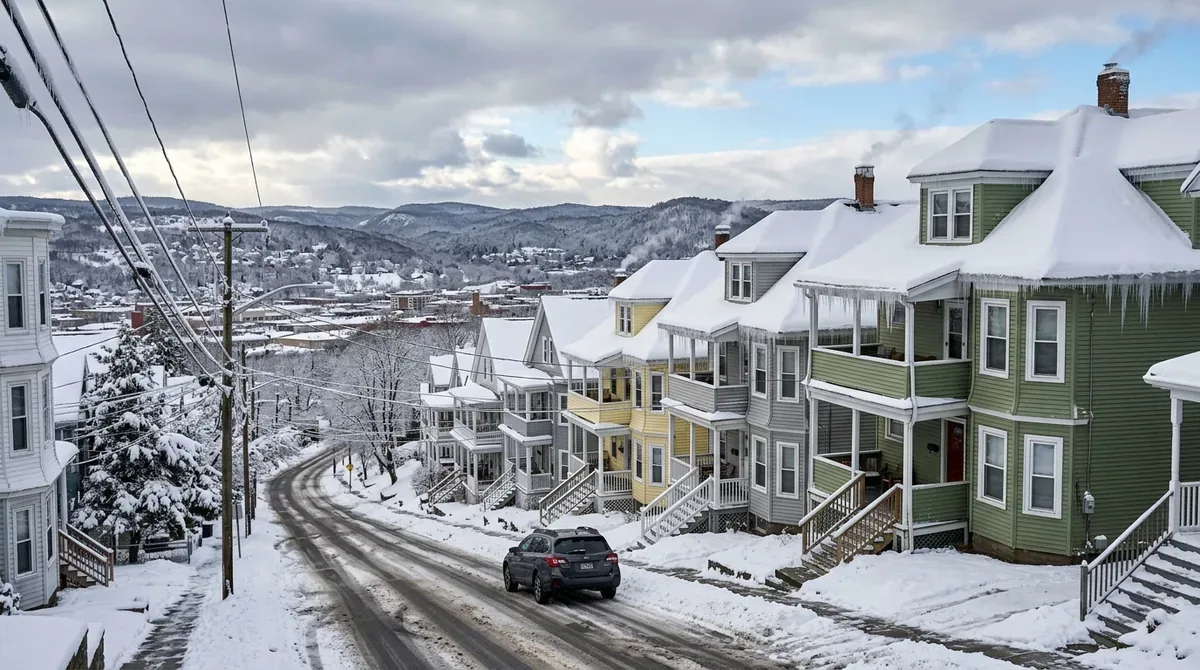
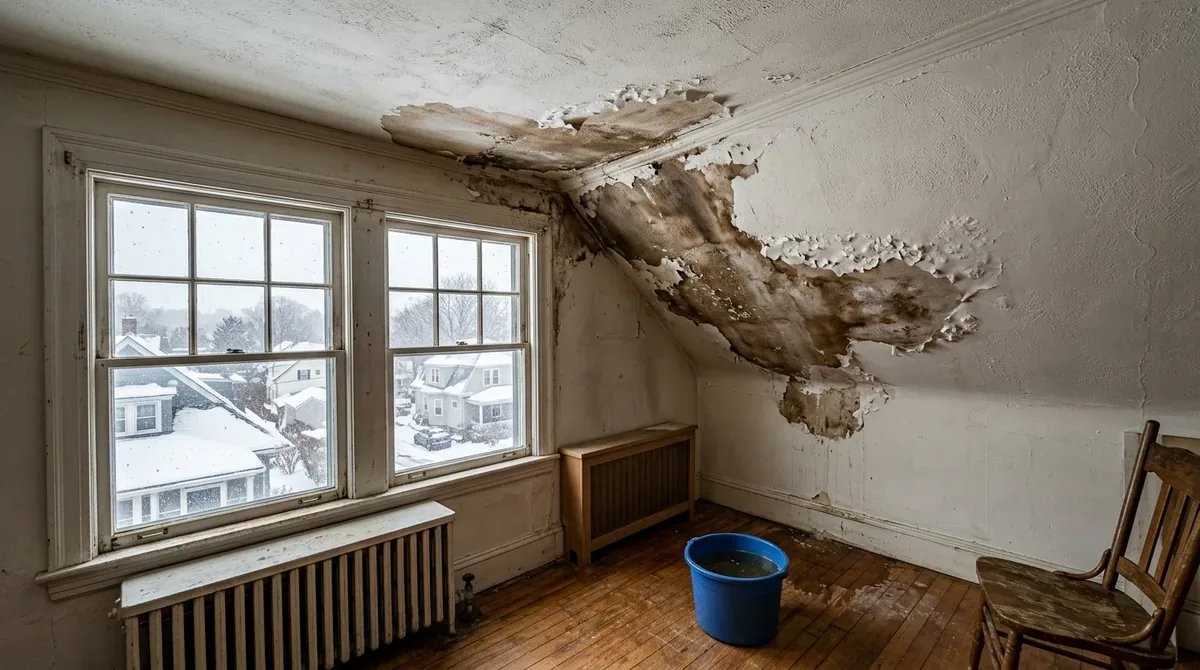
A low-slope roof rarely fails in the middle of the membrane. It fails at the edges: where the membrane turns up a wall and was only sealed, at a scupper or drain sitting a little higher than the roof around it, and along seams that standing water tests every day. Snow drifting against a wall adds weight and holds meltwater against exactly those edges.


Low-slope roofing is estimated at $4 to $10 per square foot installed across EPDM, TPO and modified bitumen. In this city it is mostly porch roofs, rear additions, garages, storefronts and the larger multi-family blocks. Slate and clay tile change the arithmetic. They cannot be roofed over, so repair is priced first, and the gambrels and hipped Foursquares carry more valleys per square foot than a gable.
A simple rectangle with real fall on it, reachable from the ground, draining to an outlet that is actually at the low point.
Walls and parapets. Every upstand has to be turned up and terminated, and every drift zone against a wall needs the snow load allowed for.
A membrane run up a wall and finished with sealant. An upstand is dressed and mechanically fixed; sealant is a finish, not a fixing.
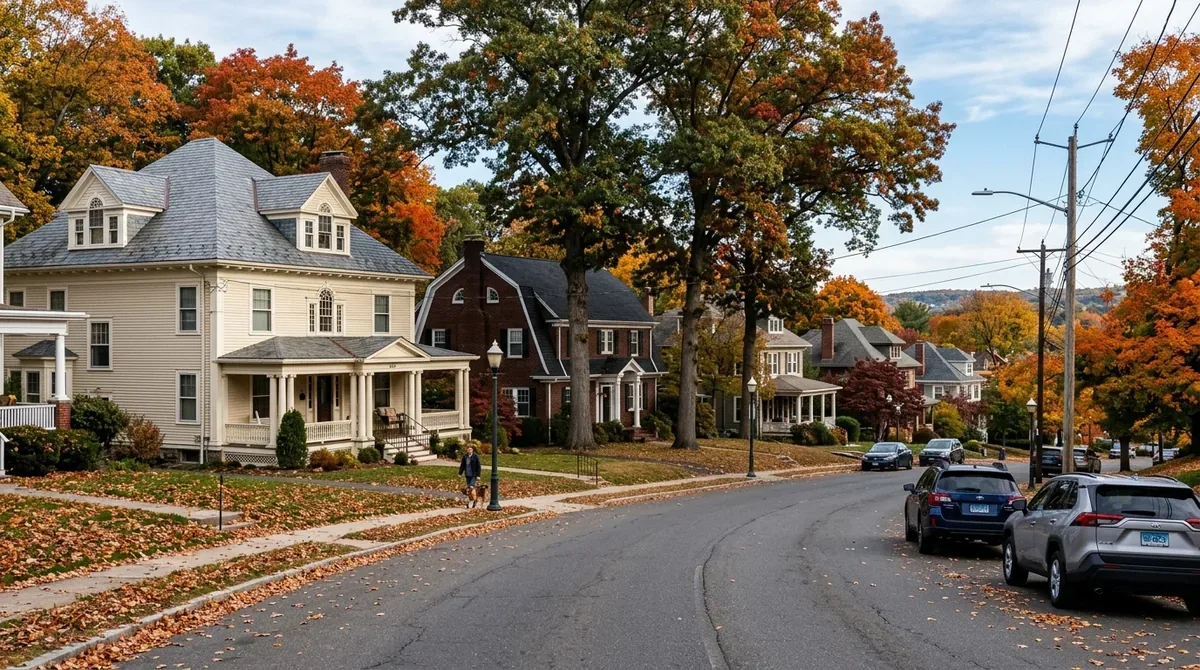
This is where Waterbury's slate survives: the district's National Register nomination records houses still carrying slate or clay tile. Gambrels and hipped Foursquares also mean more hips and valleys per square foot than a plain gable.
On a slate or tile roof here the first question is whether it can be repaired, because it cannot be roofed over.
Drainage and edges before the membrane.
Where water actually sits is checked first. An outlet that is not at the low point keeps a pond on the roof whatever membrane goes down.
EPDM, TPO or modified bitumen, chosen by foot traffic, penetrations and how the roof meets its walls, and priced side by side.
Every upstand is turned up and fixed with a termination bar or counter-flashing. Sealant finishes the detail; it does not hold it.
Replacing a roof in Overlook starts with what is on it.
Repairs in Overlook are often on roofs that cannot be covered over, so they matter more than elsewhere.
An emergency on an Overlook slate roof needs care in the dark that a shingle roof does not: walking the field breaks more slate than the storm did.
Overlook is the part of Waterbury whose National Register nomination records houses still carrying slate or clay tile.
On an Overlook slate roof, chimney flashing is woven into the slate courses, and a repair done with caulk and asphalt patches leaves black scars on gray stone.
In Overlook the inspection's first job is identifying the covering: slate, clay tile or asphalt, and if slate, whether the stone is sound or delaminating.
One city, one permit office. The 25% line decides it.
Brass-family Queen Annes. Many valleys, steep lots.
Trolley-era half-acre lots. Capes with rooms upstairs.
The 1674 ridge. Farmhouses and well-kept triple-deckers.
River to ridge. Triple-deckers and six-family blocks.
Rocky hills, Washington Hill and Hopeville. Access first.
Answered before anyone books a visit.
Each is sound when it is detailed properly, and all three are estimated at roughly $4 to $10 a square foot installed. The choice usually follows the roof: foot traffic, how many penetrations it has, and how it meets the walls around it. The upstands and the outlets matter more than the membrane.
It depends far more on the edges and the drainage than on the membrane. A well-detailed low-slope roof with its outlets at the low point lasts many years; one that ponds against a sealed upstand fails early whatever it is made of.
Both. A failed upstand, a lifted seam or a blocked outlet is a repair. A membrane split or blistered across the field, or a roof that ponds because it was framed level, is a replacement conversation.
Every quote states whether the job is a repair or a permitted replacement. The code lines named: ice barrier, deck-joint strip, layer count.