Roof Repair in Town Plot, Waterbury from $150. An estimated $400 to $2,000 for most repairs – and in Connecticut a repair has a size limit. Free inspection and a written quote.
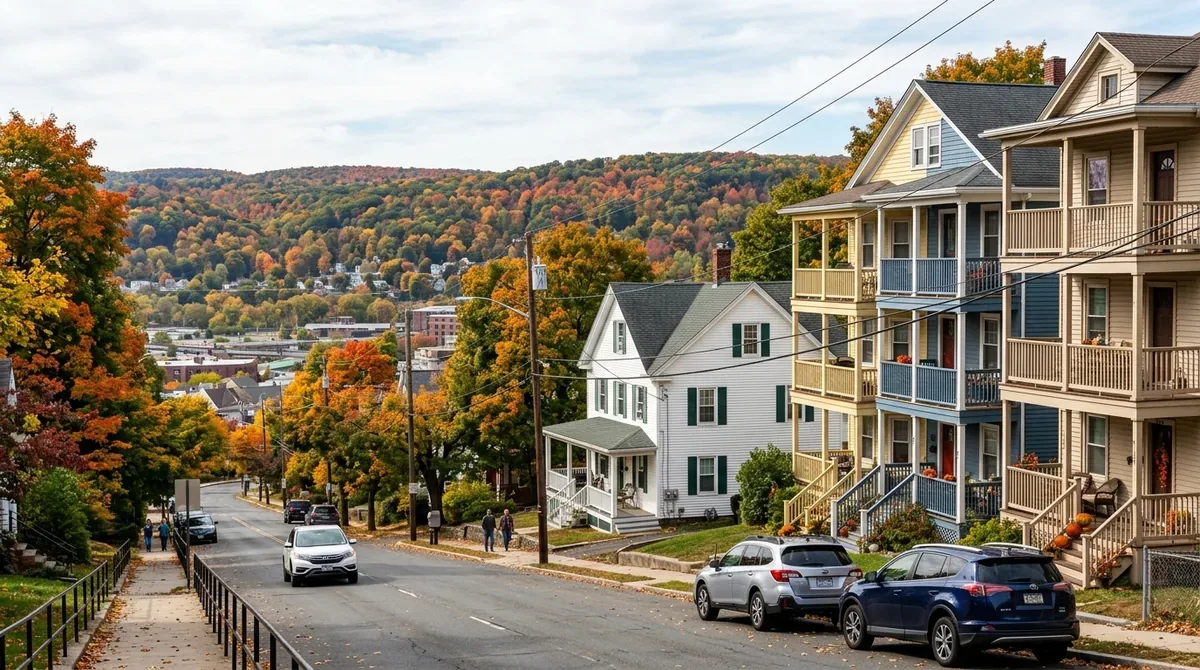
Town Plot's well-kept triple-deckers are exactly the roofs worth repairing under the 25 percent line rather than replacing over it. On the older farmhouses the repair also has to respect rafters and boards that predate any standard size.
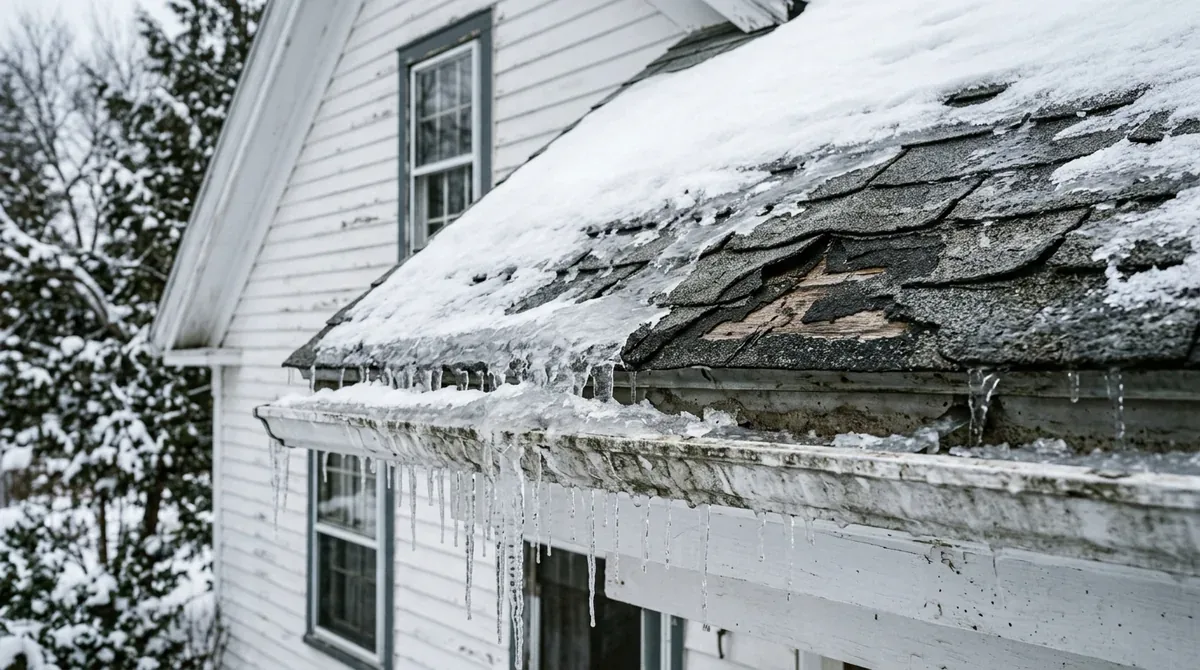
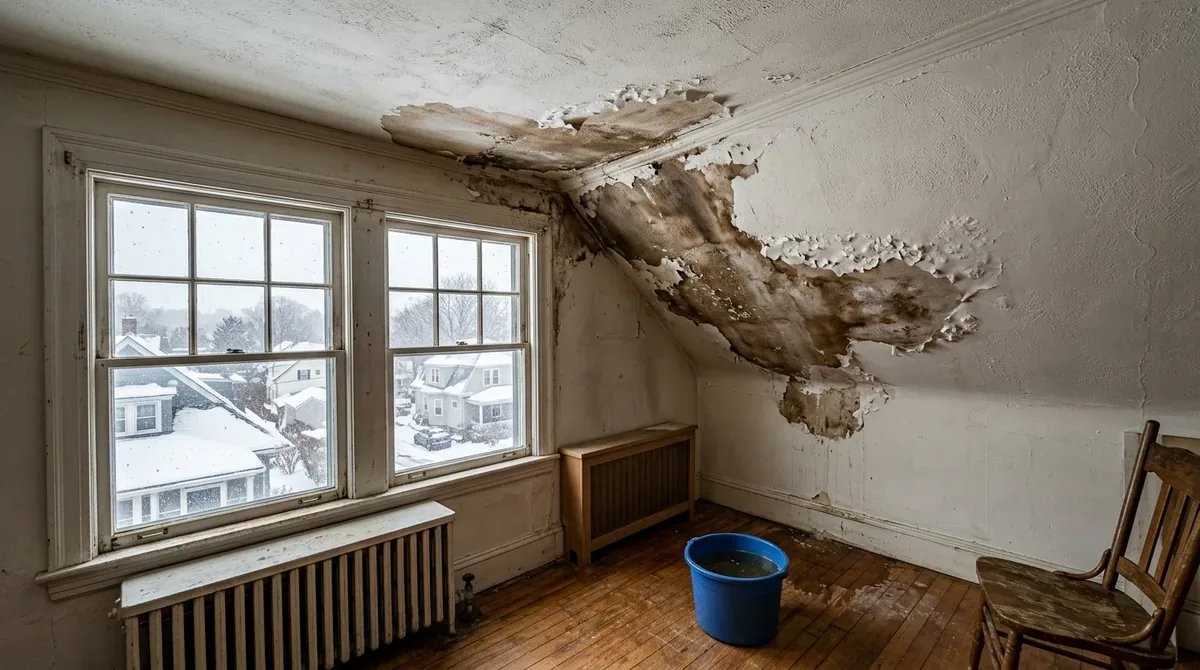
Most repairs on Waterbury's older houses trace back to five points: a chimney, a valley, a vent pipe boot, the eaves, and the junction where a porch or addition roof meets the house wall. The open field of shingles is rarely the problem, and the ceiling stain tells you where water ended up, not where it got in.


Most repairs are estimated at $400 to $2,000, with small jobs from about $150. In Connecticut a repair also has a ceiling: past 25 percent of the roof covering in a calendar year it stops being a repair and needs a permit. Owner-built frames and old farmhouse rafters are priced after the attic has been seen, not before. Well-kept triple-deckers on the ridge usually make the repair-first case.
A visible, bounded failure on a slope that can be reached: a lifted shingle, a split pipe boot, one length of flashing. Found in minutes, fixed the same day.
A leak that has already been patched once, a finished attic with nowhere to look, or a third-floor roof that needs staging before anyone can touch it.
When the work adds up toward a quarter of the roof. At that point the honest conversation is about replacement, with the permit and the code that come with it.
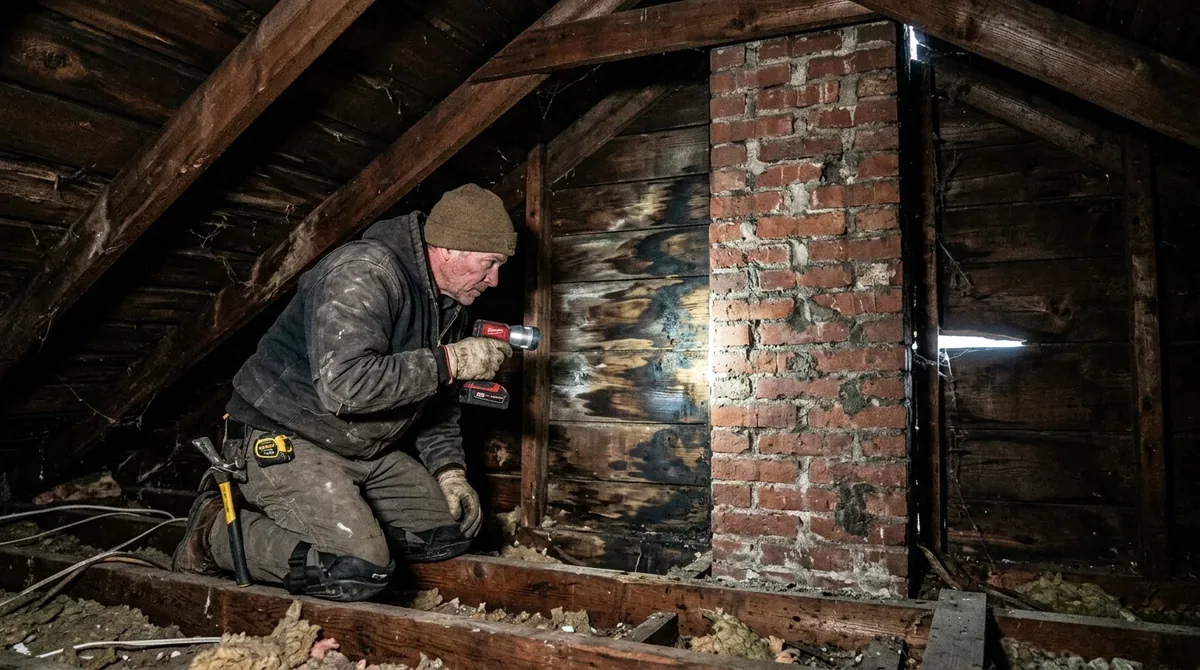
Owner-built houses are the ones where no two roof frames can be assumed alike, and a farmhouse roof may sit on rafters older than any record of them. Every frame here gets looked at from the attic before it gets priced.
On the ridge, a well-kept triple-decker is worth keeping well: repair under the line before it becomes a replacement over it.
Cause first, then the fix.
Chimney, valleys, vent boots, the eaves, and the porch or addition roof where it meets the house, because that is where most leaks on older houses here begin.
If the work stays within a quarter of the roof covering this year, it is a repair with no permit. If it does not, you hear that before anything is priced.
New shingles woven in, failed flashing renewed, and photographs before and after, so anyone can check the repair later.
On the Town Plot ridge a replacement has to start in the attic.
On the ridge, wind finds the roof first.
Town Plot's flat roofs are often later additions to old farmhouses and owner-built homes, framed by whoever built them.
Where a Town Plot farmhouse still has slate, it may be on boards and rafters older than any record of them.
Old farmhouse chimneys on Town Plot can have mortar too eroded to hold counter-flashing until it has been raked and repointed.
On Town Plot the inspection is mostly in the attic: rafters, boards and how an owner-built or farmhouse frame was put together.
One city, one permit office. The 25% line decides it.
Burnt Hill, 1897-1925. Slate and clay tile survive.
Brass-family Queen Annes. Many valleys, steep lots.
Trolley-era half-acre lots. Capes with rooms upstairs.
River to ridge. Triple-deckers and six-family blocks.
Rocky hills, Washington Hill and Hopeville. Access first.
Answered before anyone books a visit.
As closely as the shingles still made allow. On an older roof an exact color match is rare, so the repair is placed and blended to read as weathering rather than as a patch.
Up to 25 percent of the roof covering within one calendar year on a one- or two-family house. Past that, Connecticut treats the work as needing a permit. Several small repairs in the same year count together, so the line is about the roof, not the invoice.
Small jobs start around $150, and most repairs are estimated at $400 to $2,000. The price follows access and what is found: a lifted shingle on a reachable slope is quick, a leak traced through a finished attic under a third-floor roof is not.
Every quote states whether the job is a repair or a permitted replacement. The code lines named: ice barrier, deck-joint strip, layer count.