Roof Replacement in Hillside, Waterbury from $10,000. An estimated $10,000 to $18,000 for most Waterbury houses in asphalt – and in Connecticut a full replacement always comes with a permit. Free inspection and a written quote.
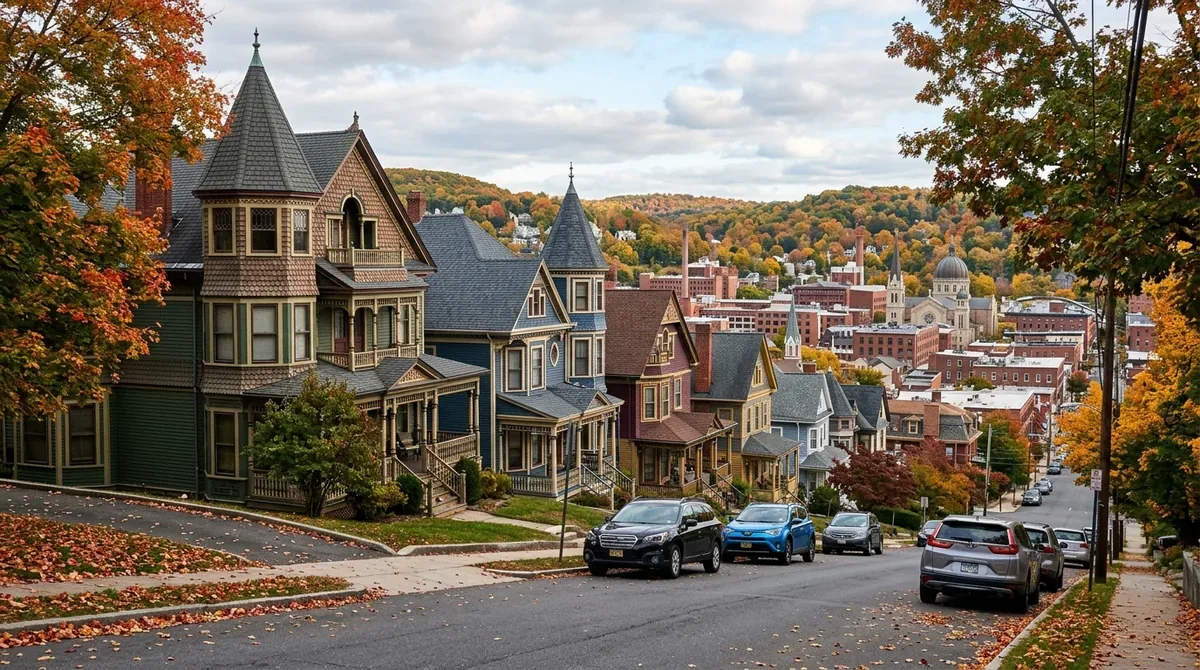
A Queen Anne on the Hillside is the most expensive roof shape in the city to replace: many planes, many valleys, steep dormers, and a lot that falls away under the staging. Two houses of the same floor area here can be thousands apart, and the valley count is usually why.
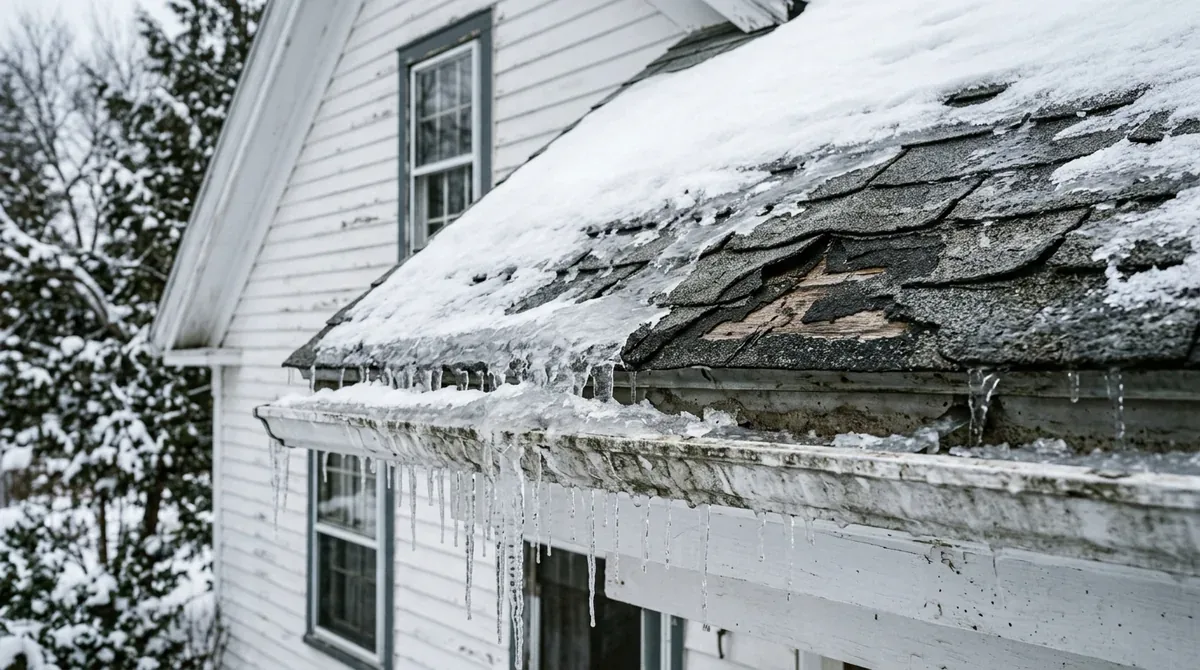
On a roof that is due, the shingles are rarely the first thing to go. The eaves go first, where freeze and thaw back meltwater under the bottom courses and soften the deck edge; then the flashings, caulked one season too many; then the deck, where a soft sheet shows as a dip you can see from the street. A replacement that only changes the shingles leaves all three behind.


Estimated Connecticut figures for an asphalt roof, with architectural shingle at about $4.50 to $8.00 per square foot installed. In Waterbury add the permit: $50 for the first $1,000 of the job, $25 for each $1,000 after and a small state fee, so roughly $380 on a $14,000 roof. Staging on a steep lot and roofs with many planes and valleys are the real lines here. Two Queen Annes of the same floor area can be priced far apart because one has twice the valleys.
A simple gable, one existing layer to strip, a deck that turns out sound, and a driveway to stage from. Plenty of Bunker Hill and Town Plot qualifies.
Height and slope: three stories, a hillside lot, or a Queen Anne with more valleys than plain roof. A second layer to strip and board decking that needs making good add to it as well.
Decking. Nobody knows how much has softened until the old covering is off, so it belongs in the quote as a rate per sheet rather than a lump sum.
The most complicated roofs in the city: many planes, many valleys, steep dormers, on lots that fall away sharply. Staging on the slope is as much of the price as the covering.
On a roof with this many valleys, the valley detail is where the budget should go first.
Four stages, each one checkable.
A full replacement is over Connecticut's 25 percent line by definition, so the permit goes in to the Department of Inspections before anything is delivered. Its fee is in the quote, not added after it.
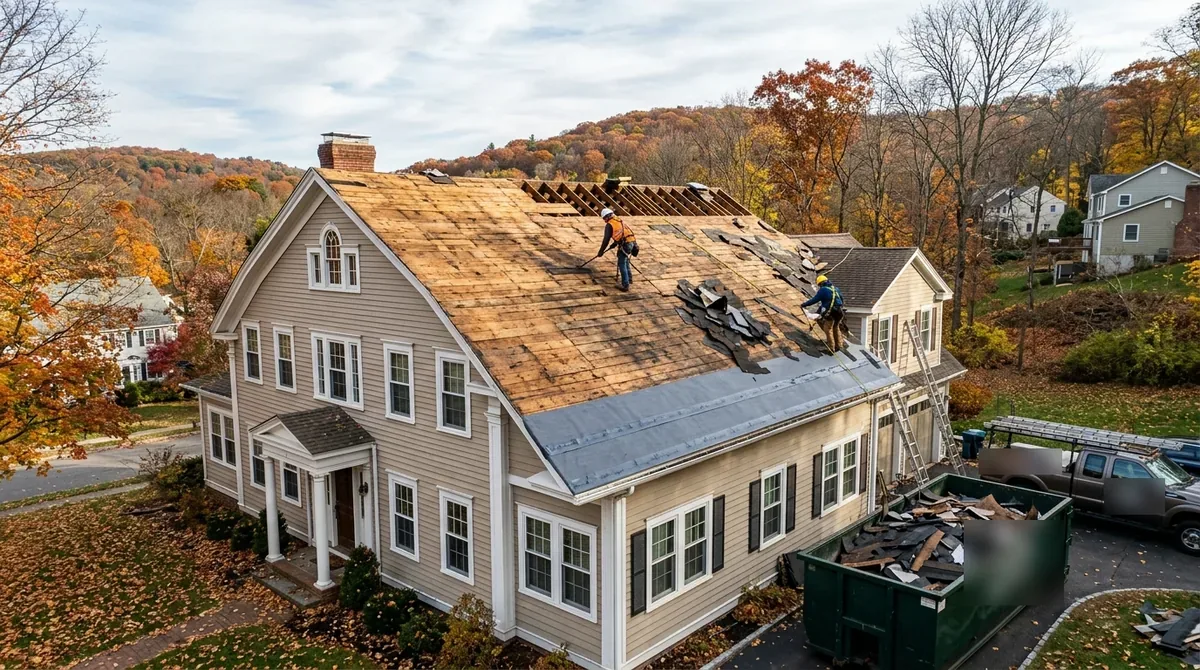
Every layer comes off. The deck is walked, and soft sheets are marked and photographed, so the per-sheet rate in the quote becomes a count you can see.
Step flashing and pipe boots are renewed rather than reused, the ridge is vented, and the city inspects the finished roof before the final payment.
On a Hillside Queen Anne the recurring repair is almost always a valley or a dormer cheek.
On the Hillside's steep lots a night callout is limited by where a ladder can safely stand.
On the Hillside, flat roofs sit on porches, bays and the later apartment buildings among the Queen Annes.
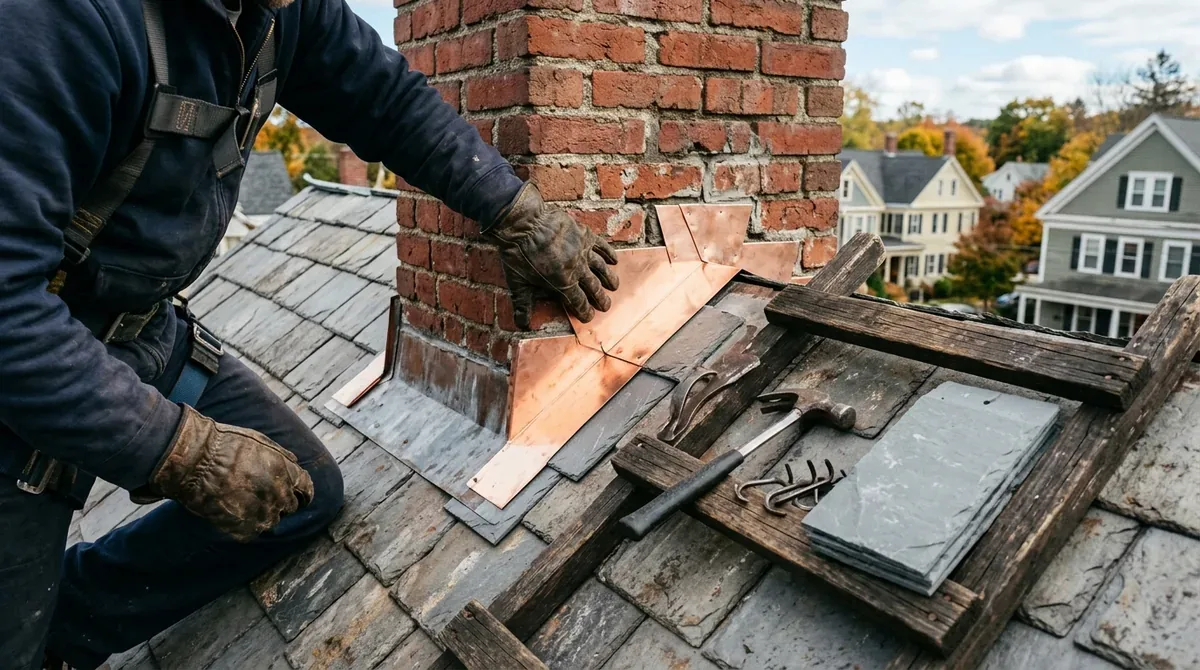
Where a Hillside house still carries slate, its steep, broken roof lines make every repair an access problem first.
The Hillside's big houses often have several tall chimneys rising through steep, complicated roofs.
On a Hillside Queen Anne the inspection counts valleys, dormers and junctions as carefully as it measures area, because that is where these roofs fail and where their price comes from.
One city, one permit office. The 25% line decides it.
Burnt Hill, 1897-1925. Slate and clay tile survive.
Trolley-era half-acre lots. Capes with rooms upstairs.
The 1674 ridge. Farmhouses and well-kept triple-deckers.
River to ridge. Triple-deckers and six-family blocks.
Rocky hills, Washington Hill and Hopeville. Access first.
Answered before anyone books a visit.
One to three days on site for most houses once the permit is issued. A three-family house that needs staging, a second layer to strip or a lot of soft decking adds time, and so does the weather: shingles need warmth to seal, so late summer and early fall are the easiest months to book.
Only where it is soft or damaged, and that is found once the old roof is off. The quote prices decking as a rate per sheet, so you pay for what is actually replaced, and every replaced sheet is photographed.
Yes, for a full replacement. Connecticut's code excuses only repairs limited to 25 percent of the roof covering in one calendar year, so every full re-roof is permitted through the Department of Inspections at 185 South Main Street. The fee is $50 plus $25 per additional $1,000 of the job, and the permitted roof is inspected by the city.
Every quote states whether the job is a repair or a permitted replacement. The code lines named: ice barrier, deck-joint strip, layer count.