Chimney Flashing Repair in Hillside, Waterbury from $300. An estimated $300 to $1,800 – the commonest source of a leak on an older Waterbury house. Free inspection and a written quote.
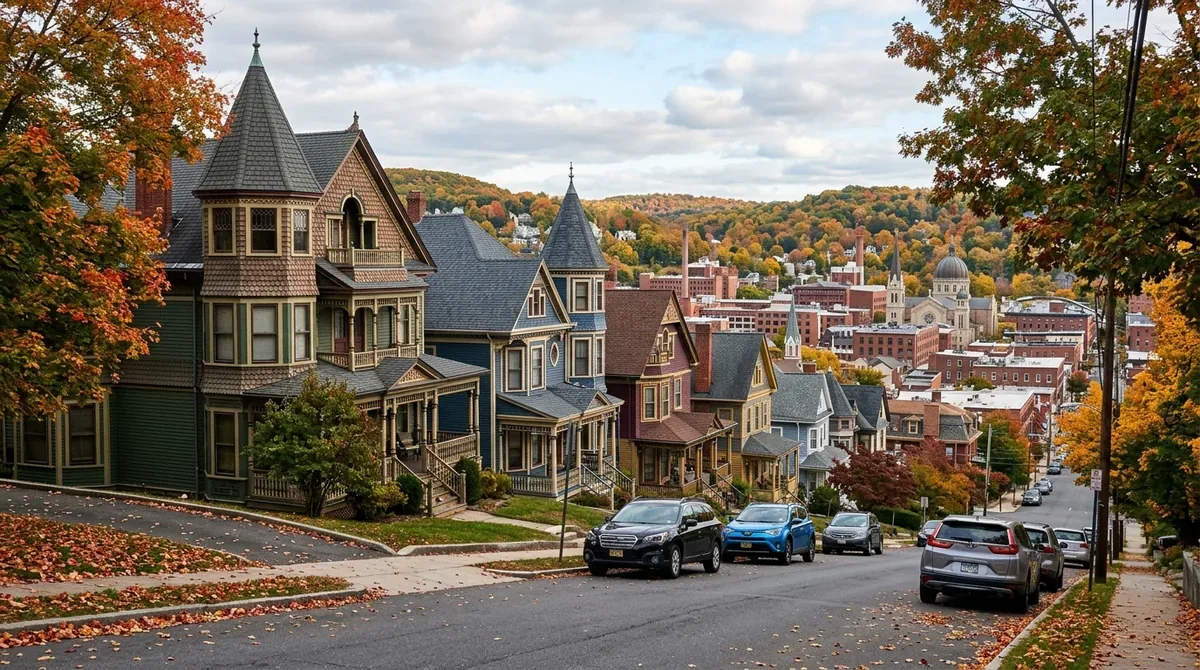
The Hillside's big houses often have several tall chimneys rising through steep, complicated roofs. Each one is four flashing details and often a cricket, and on a roof with this many planes water from one failed stack can surface far from it.
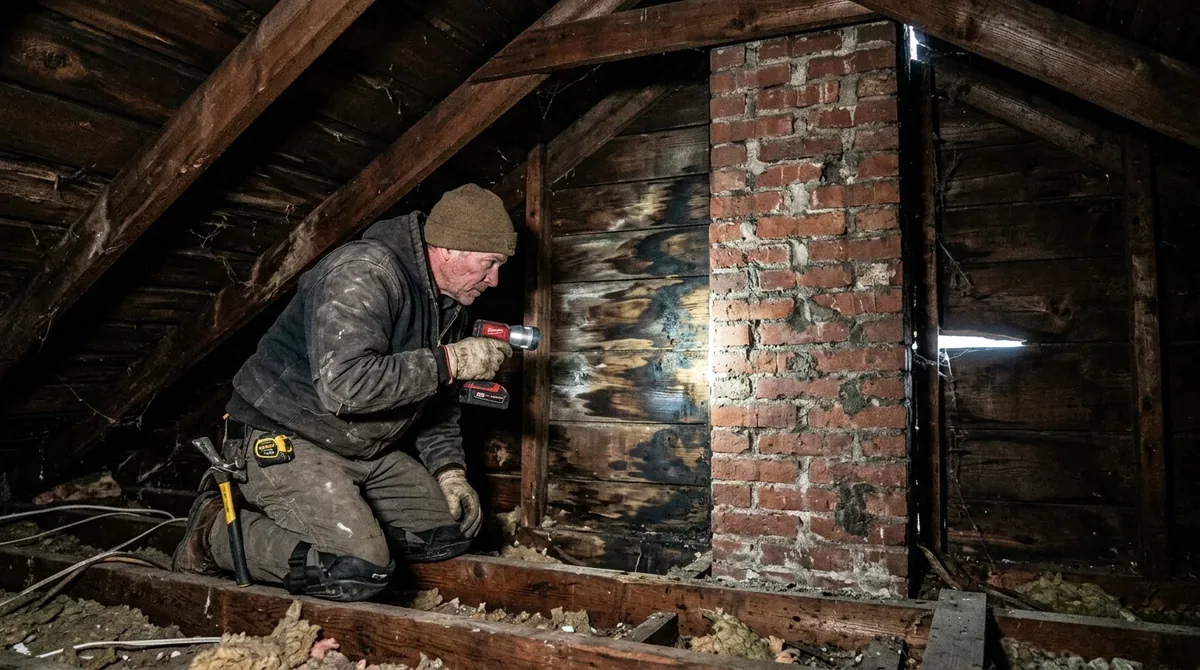
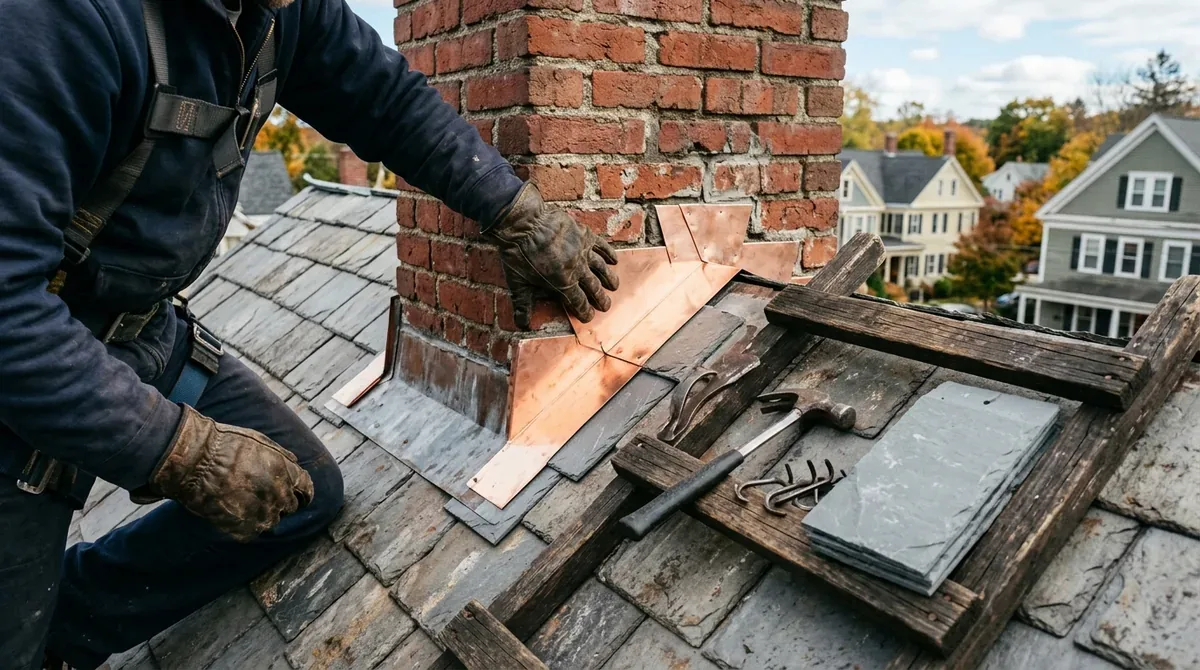
A chimney leaks from one of four places: the step flashing up the sides, the apron at the front, the cricket or back pan behind, or the counter-flashing let into the mortar. On older stacks the mortar is usually the weak link. Once the joints erode the counter-flashing pulls loose, water runs down behind the metal, and caulk on the surface never reaches it.


Chimney flashing repair is estimated at $300 to $1,800 in most cases. It is the commonest single source of a recurring leak on a pitched roof, and Waterbury's pre-war houses have a great many old masonry stacks. Staging on a steep lot and roofs with many planes and valleys are the real lines here. Two Queen Annes of the same floor area can be priced far apart because one has twice the valleys.
One failed detail on sound brickwork – counter-flashing pulled out of a joint, or an apron lifted at a corner.
Eroded mortar that has to be raked and repointed before new metal can bed into it, and a missing cricket on a wide stack.
Fresh caulk on weathered metal. New step flashing is bright against an old stack; reused flashing with a bead run round it looks tidy only from the street.
The most complicated roofs in the city: many planes, many valleys, steep dormers, on lots that fall away sharply. Staging on the slope is as much of the price as the covering.
On a roof with this many valleys, the valley detail is where the budget should go first.
All four details, and the mortar behind them.
Step flashing, apron, cricket and counter-flashing are each checked, because the visible one is rarely the only one failing.
Eroded joints are raked out and repointed, so the counter-flashing has sound mortar to sit in.
Old flashing comes out rather than being caulked over, and new step and counter-flashing is woven into the roof.
A Queen Anne on the Hillside is the most expensive roof shape in the city to replace: many planes, many valleys, steep dormers, and a lot that falls away under the staging.
On a Hillside Queen Anne the recurring repair is almost always a valley or a dormer cheek.
On the Hillside's steep lots a night callout is limited by where a ladder can safely stand.
On the Hillside, flat roofs sit on porches, bays and the later apartment buildings among the Queen Annes.
Where a Hillside house still carries slate, its steep, broken roof lines make every repair an access problem first.
On a Hillside Queen Anne the inspection counts valleys, dormers and junctions as carefully as it measures area, because that is where these roofs fail and where their price comes from.
One city, one permit office. The 25% line decides it.
Burnt Hill, 1897-1925. Slate and clay tile survive.
Trolley-era half-acre lots. Capes with rooms upstairs.
The 1674 ridge. Farmhouses and well-kept triple-deckers.
River to ridge. Triple-deckers and six-family blocks.
Rocky hills, Washington Hill and Hopeville. Access first.
Answered before anyone books a visit.
Estimated at $300 to $1,800 in most cases. One failed detail on sound brickwork sits at the low end; eroded mortar to rake and repoint, or a cricket to build behind a wide stack, pushes it up.
Only as a stopgap. Caulk over old metal holds for a season or two, and once the mortar behind the counter-flashing has eroded, water runs behind the metal where no surface sealant reaches.
Because water lands on a rafter and runs along it until something stops it. A stain a room away from the chimney is entirely ordinary, and it is exactly why patching the ceiling side achieves nothing.
Every quote states whether the job is a repair or a permitted replacement. The code lines named: ice barrier, deck-joint strip, layer count.