Roof Replacement in the South End, Waterbury from $10,000. An estimated $10,000 to $18,000 for most Waterbury houses in asphalt – and in Connecticut a full replacement always comes with a permit. Free inspection and a written quote.
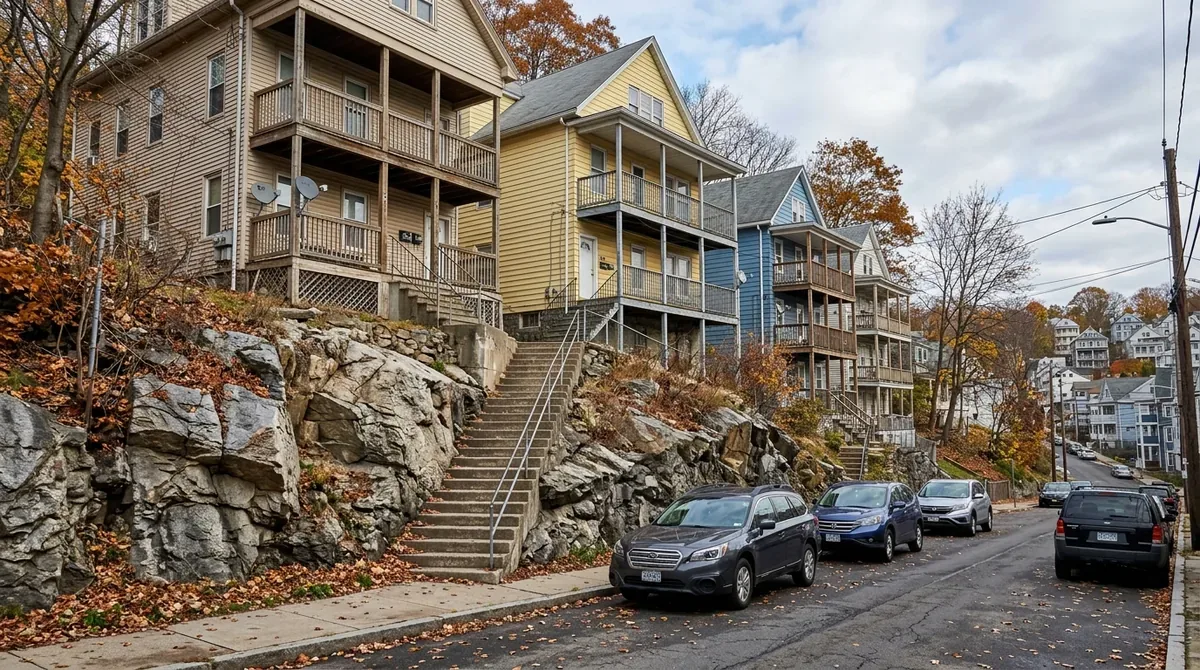
A replacement on the South End's rocky hills is priced from the street up: where the ladder can stand, where the dumpster fits, and how three stories of tear-off come down a sloping lot. The roof itself is often an ordinary gable; getting to it is not.
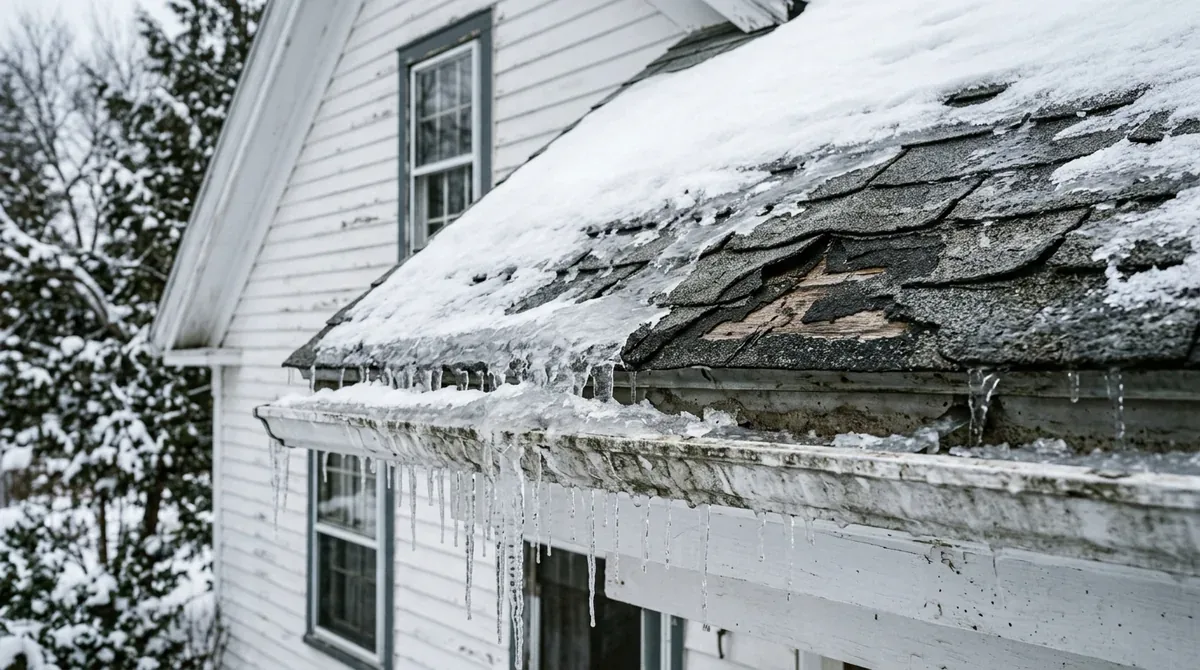
On a roof that is due, the shingles are rarely the first thing to go. The eaves go first, where freeze and thaw back meltwater under the bottom courses and soften the deck edge; then the flashings, caulked one season too many; then the deck, where a soft sheet shows as a dip you can see from the street. A replacement that only changes the shingles leaves all three behind.


Estimated Connecticut figures for an asphalt roof, with architectural shingle at about $4.50 to $8.00 per square foot installed. In Waterbury add the permit: $50 for the first $1,000 of the job, $25 for each $1,000 after and a small state fee, so roughly $380 on a $14,000 roof. Rock and slope come first. Access, ladder footing and getting a tear-off down three stories on a sloping lot are line items here, not afterthoughts.
A simple gable, one existing layer to strip, a deck that turns out sound, and a driveway to stage from. Plenty of Bunker Hill and Town Plot qualifies.
Height and slope: three stories, a hillside lot, or a Queen Anne with more valleys than plain roof. A second layer to strip and board decking that needs making good add to it as well.
Decking. Nobody knows how much has softened until the old covering is off, so it belongs in the quote as a rate per sheet rather than a lump sum.
Rock and slope decide the job before the roof does: where a ladder can stand, where a dumpster can go, and how a tear-off comes down three stories on a sloping lot.
On a South End hill, access is priced first and shingles second, and the quote should say so.
Four stages, each one checkable.
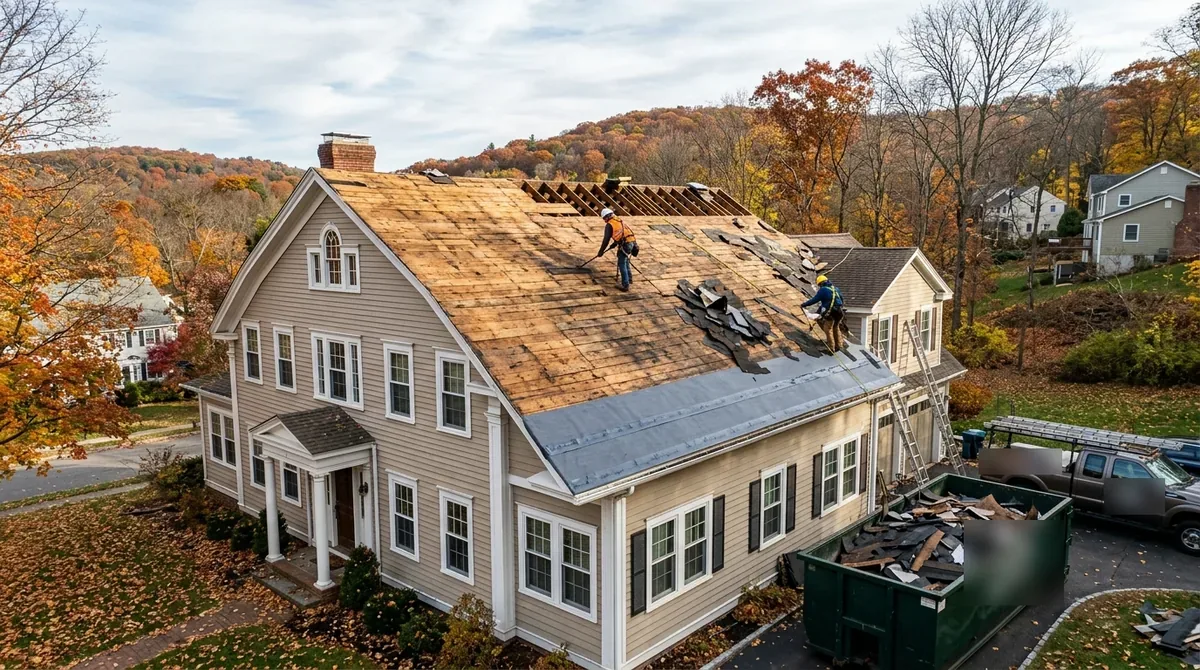
A full replacement is over Connecticut's 25 percent line by definition, so the permit goes in to the Department of Inspections before anything is delivered. Its fee is in the quote, not added after it.
Every layer comes off. The deck is walked, and soft sheets are marked and photographed, so the per-sheet rate in the quote becomes a count you can see.
Step flashing and pipe boots are renewed rather than reused, the ridge is vented, and the city inspects the finished roof before the final payment.
South End repairs are usually small jobs on tall buildings: a flashing or a few shingles on a third-floor roof above a sloping lot.
On a South End hill at night, safe ladder footing on rock and slope decides what can be done before morning.
On the South End's three-story buildings a flat roof is hard to reach and easy to forget until it leaks into a top-floor apartment.
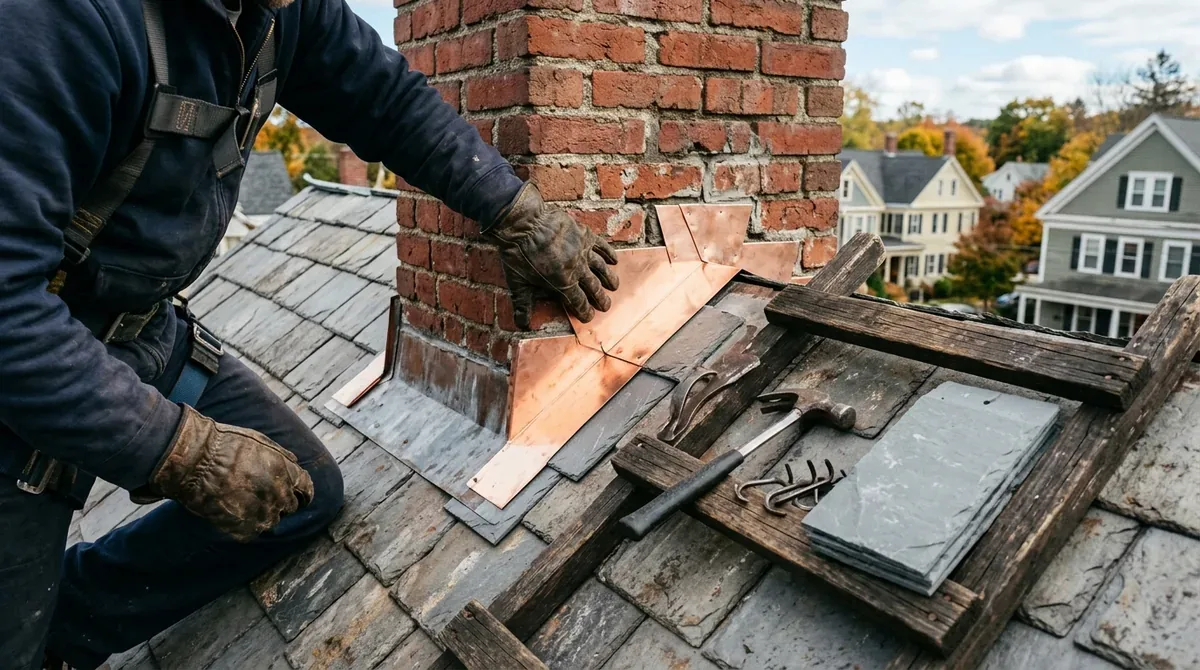
On the South End's hills a slate repair three stories up is mostly an access job.
A chimney on a three-story South End building takes the wind on an exposed hill.
On the South End the inspection includes the approach: where a ladder can stand on rock, where staging and a dumpster can go, and what that adds.
One city, one permit office. The 25% line decides it.
Burnt Hill, 1897-1925. Slate and clay tile survive.
Brass-family Queen Annes. Many valleys, steep lots.
Trolley-era half-acre lots. Capes with rooms upstairs.
The 1674 ridge. Farmhouses and well-kept triple-deckers.
River to ridge. Triple-deckers and six-family blocks.
Answered before anyone books a visit.
Only over a single existing layer that is dry and sound, and never over slate or tile. The code allows no new covering over two existing layers. An overlay also buries the eaves, so if there was never ice barrier there, there still is not – the wrong saving in a city built for 35 pounds of snow per square foot.
One to three days on site for most houses once the permit is issued. A three-family house that needs staging, a second layer to strip or a lot of soft decking adds time, and so does the weather: shingles need warmth to seal, so late summer and early fall are the easiest months to book.
The city checks the work against the permit and the building code. On a re-roof the eaves are the part most worth seeing done right, because the ice barrier there is covered the moment the shingles go on.
Every quote states whether the job is a repair or a permitted replacement. The code lines named: ice barrier, deck-joint strip, layer count.