Chimney Flashing Repair in the South End, Waterbury from $300. An estimated $300 to $1,800 – the commonest source of a leak on an older Waterbury house. Free inspection and a written quote.
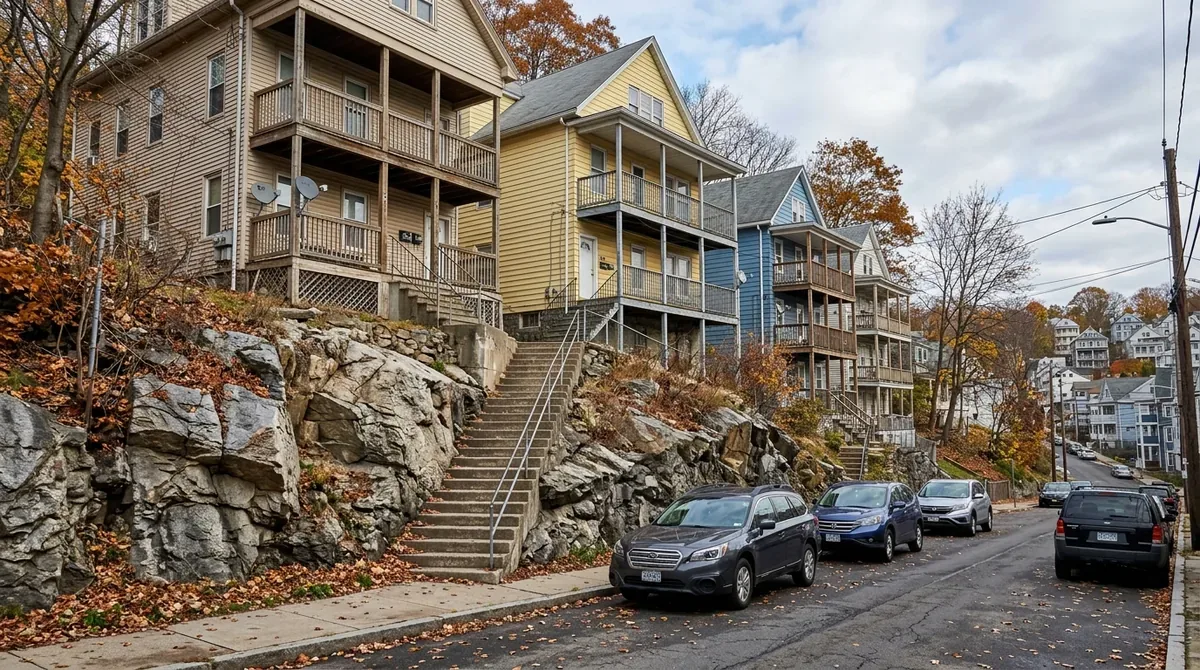
A chimney on a three-story South End building takes the wind on an exposed hill. Counter-flashing pulled out of its joint is the usual failure, and the repair is planned around reaching the stack safely from a sloping lot.
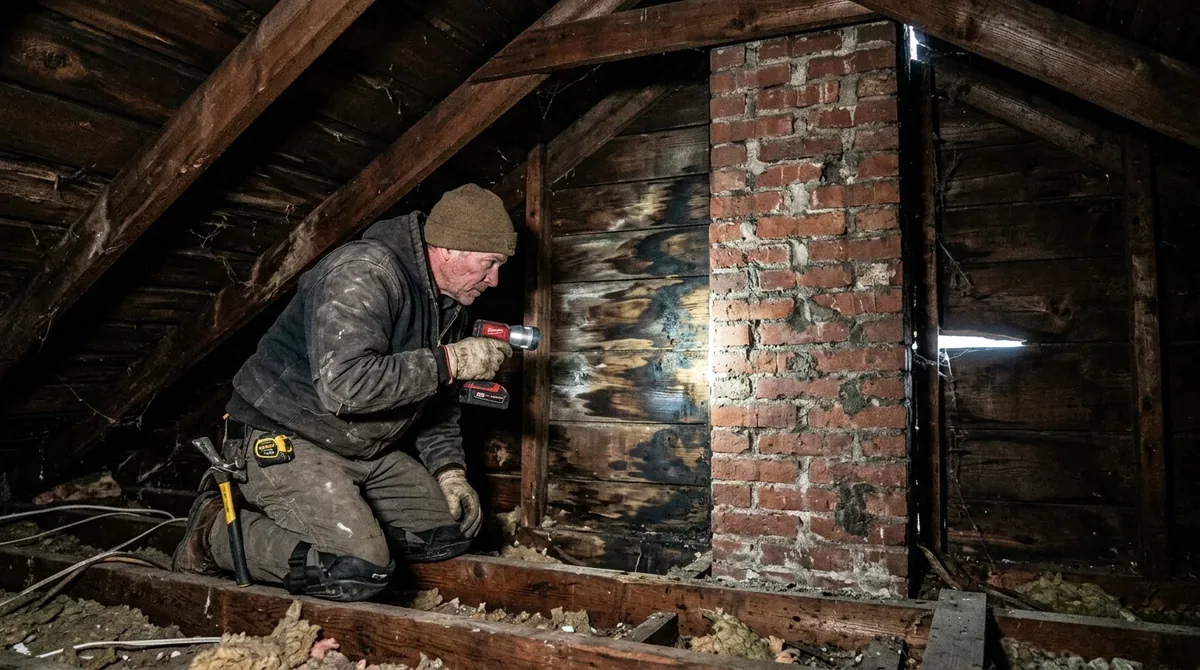
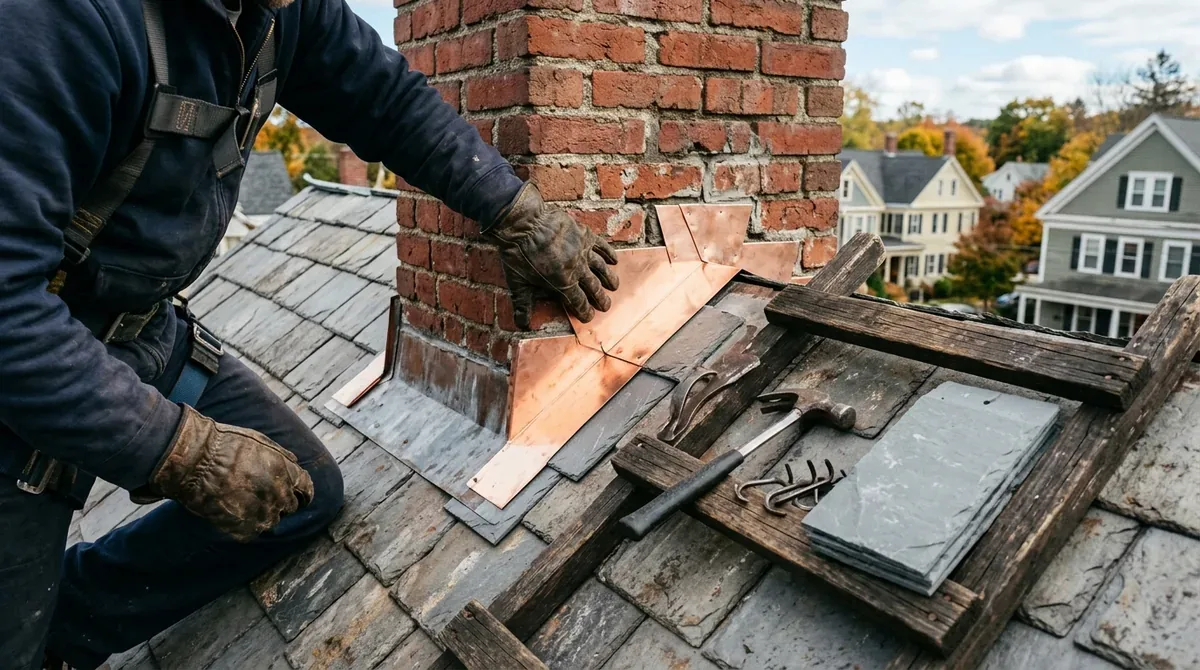
A chimney leaks from one of four places: the step flashing up the sides, the apron at the front, the cricket or back pan behind, or the counter-flashing let into the mortar. On older stacks the mortar is usually the weak link. Once the joints erode the counter-flashing pulls loose, water runs down behind the metal, and caulk on the surface never reaches it.


Chimney flashing repair is estimated at $300 to $1,800 in most cases. It is the commonest single source of a recurring leak on a pitched roof, and Waterbury's pre-war houses have a great many old masonry stacks. Rock and slope come first. Access, ladder footing and getting a tear-off down three stories on a sloping lot are line items here, not afterthoughts.
One failed detail on sound brickwork – counter-flashing pulled out of a joint, or an apron lifted at a corner.
Eroded mortar that has to be raked and repointed before new metal can bed into it, and a missing cricket on a wide stack.
Fresh caulk on weathered metal. New step flashing is bright against an old stack; reused flashing with a bead run round it looks tidy only from the street.
Rock and slope decide the job before the roof does: where a ladder can stand, where a dumpster can go, and how a tear-off comes down three stories on a sloping lot.
On a South End hill, access is priced first and shingles second, and the quote should say so.
All four details, and the mortar behind them.
Step flashing, apron, cricket and counter-flashing are each checked, because the visible one is rarely the only one failing.
Eroded joints are raked out and repointed, so the counter-flashing has sound mortar to sit in.
Old flashing comes out rather than being caulked over, and new step and counter-flashing is woven into the roof.
A replacement on the South End's rocky hills is priced from the street up: where the ladder can stand, where the dumpster fits, and how three stories of tear-off come down a sloping lot.
South End repairs are usually small jobs on tall buildings: a flashing or a few shingles on a third-floor roof above a sloping lot.
On a South End hill at night, safe ladder footing on rock and slope decides what can be done before morning.
On the South End's three-story buildings a flat roof is hard to reach and easy to forget until it leaks into a top-floor apartment.
On the South End's hills a slate repair three stories up is mostly an access job.
On the South End the inspection includes the approach: where a ladder can stand on rock, where staging and a dumpster can go, and what that adds.
One city, one permit office. The 25% line decides it.
Burnt Hill, 1897-1925. Slate and clay tile survive.
Brass-family Queen Annes. Many valleys, steep lots.
Trolley-era half-acre lots. Capes with rooms upstairs.
The 1674 ridge. Farmhouses and well-kept triple-deckers.
River to ridge. Triple-deckers and six-family blocks.
Answered before anyone books a visit.
If it is wider than 30 inches across the slope, the code asks for one. A cricket sheds water and snow around the back of the stack; without it, drifting snow sits against the brickwork and the meltwater finds its way under the shingles.
Estimated at $300 to $1,800 in most cases. One failed detail on sound brickwork sits at the low end; eroded mortar to rake and repoint, or a cricket to build behind a wide stack, pushes it up.
We rake and repoint the joints the flashing depends on. Where the brickwork itself is failing we say so plainly, because new flashing on a spent chimney does not last.
Every quote states whether the job is a repair or a permitted replacement. The code lines named: ice barrier, deck-joint strip, layer count.