An ice dam is a thick ridge of refrozen meltwater along cold roof eaves that blocks drainage and forces water backward beneath shingles into Waterbury attics, plaster walls, and exterior soffits.
Ice dams form when warm air escaping an under-insulated Waterbury attic heats the upper roof deck above 32°F, melting snow that refreezes instantly into a solid ice wall along overhang eaves that sit below freezing. Because residential asphalt shingles rely on gravity shedding rather than waterproof welded seams, standing meltwater pooled behind an eave ridge works upward under shingle laps by capillary suction and drips down rafters onto bedroom ceilings and exterior stud cavities.
Once an ice ridge forces moisture under brittle winter tabs or loosens valley flashing, homeowners need targeted roof leak repair in Waterbury paired with an interior attic trace to confirm whether the failure stayed local or soaked sheathing along the lower slope.
Preventative ground-level snow raking costs zero contractor labor when done before ice hardens, whereas active winter ice-dam cover, relief channels, or low-pressure steam removal in Waterbury ranges from an estimated $400 to $1,500 depending on height and severity. Choosing the wrong removal method frequently creates more shingle and fascia damage than the ice itself.
| Method | Estimated Cost | Safety for Shingles | Best Timing in Waterbury |
|---|---|---|---|
| Wheel-Safe Roof Rake (Ground) | $45–$90 tool | High when pulling bottom 3–4 ft gently | Immediately after snowfall before thaw-freeze cycle |
| Calcium Chloride Drain Socks | $30–$75 supplies | Moderate (vertical drainage channels only) | Minor eave ice ridges without active ceiling leaks |
| Low-Pressure Steam / Relief | $400–$1,500 est. | High when performed by harnessed pros | Active interior ceiling drips or thick multi-layer dams |
| Axes, Chisels, or Rock Salt | Causes $1,000+ repairs | Unsafe — voids warranties & tears tabs | Never recommended on asphalt, flat, or slate roofs |
50-Word Summary: Pull fresh snow off the bottom three to four feet of eaves with a cushioned roof rake before freeze cycles set in. Never chip solid ice with hammers or spread rock salt. When meltwater enters interior walls during a thaw, request emergency winter roof cover in Waterbury instead of climbing icy ladders.
Connecticut's State Building Code requires a continuous self-adhering ice-and-water membrane applied from the lower eave edge at least 24 inches past the interior face of the exterior wall during permitted roof replacement. Because Waterbury contains a high share of pre-1950 capes and colonials with narrow soffit intakes and steep upper knee walls, code-depth eave barrier plus continuous soffit-to-ridge airflow provides the only structural fix when patching cannot stop recurring leaks.
Under Connecticut's 25 percent repair threshold, small winter shingle or valley repairs stay permit-exempt on one- and two-family homes, yet localized repairs cannot insert continuous ice barrier beneath untouched roof courses. Whenever eave decay, soft plywood sheathing, or repeated winter leaks exceed a quarter of the covering, scheduling a permitted roof replacement in Waterbury allows full stripping to wood decking, air-sealing review, and two-course ice shield protection.
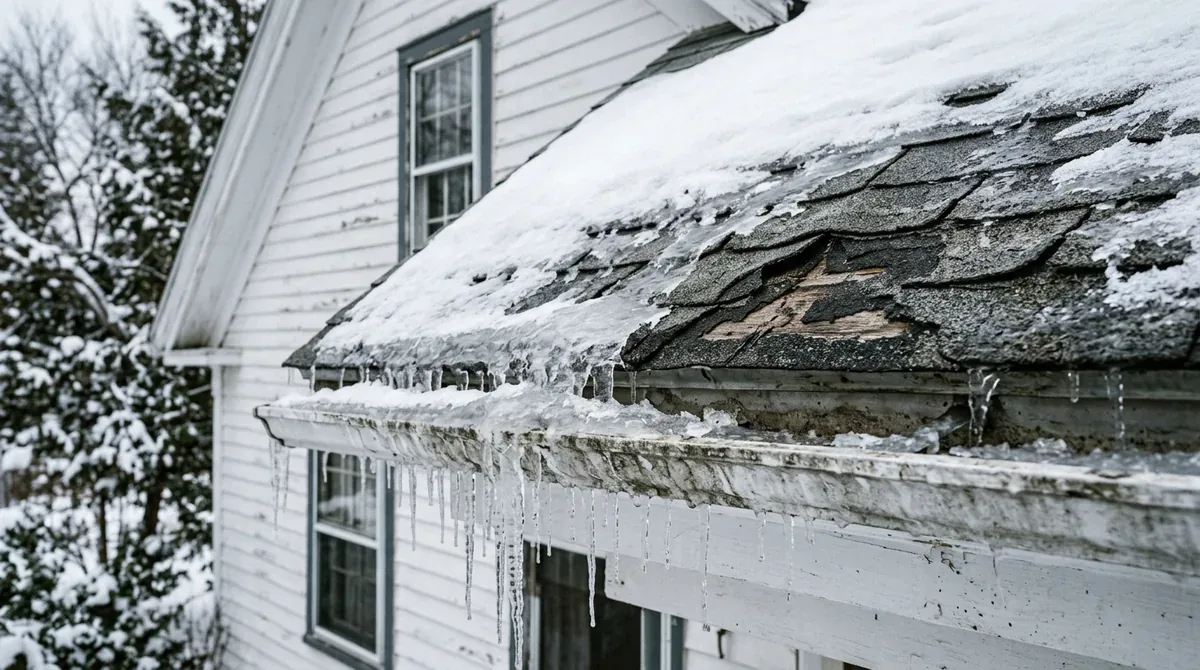
Every winter ice-dam ceiling stain warrants a dry-day attic sheathing check before spring rains arrive so hidden nail-tip frost, darkened plank boards, or compromised ridge ventilation are documented accurately. Half-story capes in Bunker Hill roof repair zones and wind-exposed slopes along Town Plot frequently exhibit heat bypass around knee-wall doors and recessed lighting.
Before committing to premature full replacement—or ignoring damp insulation—schedule a free Waterbury roof inspection with clear attic photos, and verify whether balancing intake soffits and sealing hatch gaps eliminates future winter ridges.
Waterbury & Connecticut building code facts.
Yes. Under Connecticut's residential building code amendments, new or replaced asphalt shingle roofs require a self-adhering polymer-modified bitumen ice barrier extending from the lowest eave edge to at least 24 inches inside the interior warm wall plane of the building.
No. Rock salt (sodium chloride) corrodes galvanized gutters, flashing metal, and fasteners while burning foundation plantings below, and hammers or picks fracture brittle winter asphalt shingles and tear underlayment.
Urgent winter roof leak relief, calcium chloride drainage channels, or temporary storm cover in Waterbury typically runs an estimated $400 to $1,500 depending on two- to three-story staging height, snow depth, and active interior water intrusion.
Every written Brass City Roofing quote states where the scope sits against Connecticut's 25% repair line, itemizes permits clearly, and starts with an attic check.